Leave Your Message

Why Choose Glass Tubes for Your Business?

Choosing packaging and components can shape product quality, operating costs, and customer confidence. A Glass Tube may suit businesses that need visibility, dimensional consistency, or materials compatible with specific processes. Its clear walls can make contents easy to inspect, while a smooth surface supports clean presentation. These benefits depend on the application, not appearance alone.

Glass performs well in many settings, but the right specification matters. Businesses should compare tube diameter, wall thickness, length, glass type, and tolerance requirements before ordering. A tube used for display may need different properties from one exposed to heat, repeated handling, or demanding production conditions. Details matter. Confirm supplier quality controls, sample availability, and packaging methods, especially when breakage could disrupt operations. Requesting test data or inspecting a production sample can reveal issues that a product description may not show.

Cost deserves a closer look. Glass can offer durability and a premium feel, yet transport weight and careful handling may raise total costs. It is not automatically the best choice. Consider the full workflow, including storage, filling, shipping, and end use. Also check that the tube is appropriate for the intended contents and operating environment; compatibility should be confirmed rather than assumed. Real-world trials may uncover small problems, such as a cap that fits poorly or a tube that is awkward to handle. A sound purchasing decision balances performance, reliability, and practicality. This guide explores where glass tubes can add value, what to evaluate, and which trade-offs deserve honest attention.
Why Choose Glass Tubes for Your Business?

What Glass Tubes Are and How They Are Made

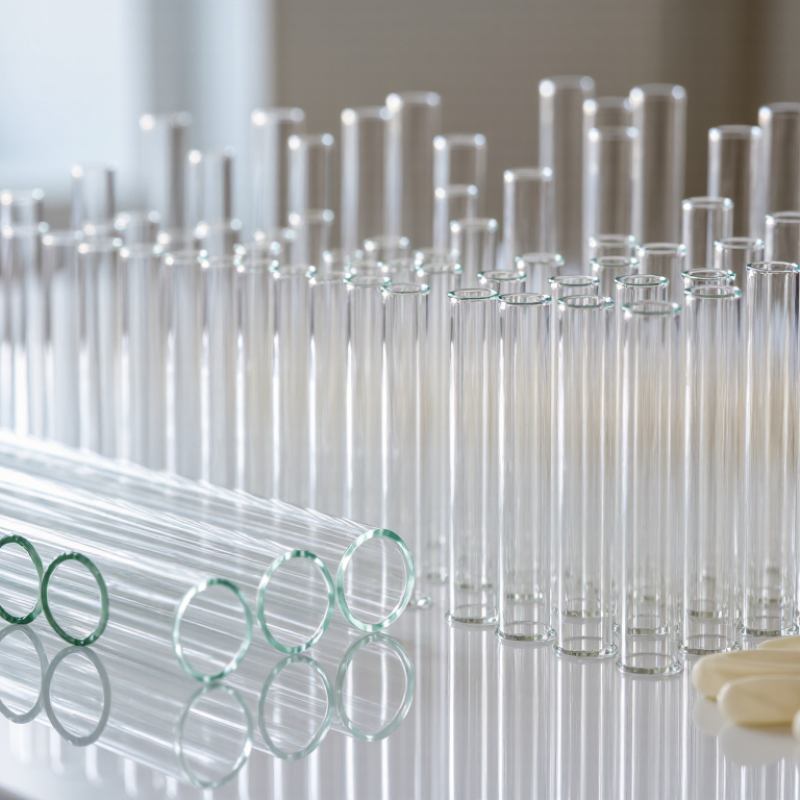
Glass tubes are hollow cylinders formed from molten glass into continuous lengths or individual sections. Their walls may be thin or thick, and their diameters suit uses ranging from lighting to laboratory equipment and industrial assemblies. Soda-lime glass serves many general purposes, while borosilicate glass offers better resistance to temperature changes. The right choice depends on heat, chemicals, pressure, and how the tube will be joined. Clear glass looks reassuring, but appearance alone tells you little.

Production starts with measured raw materials melted in a furnace. The hot glass is drawn through forming equipment, while controlled heat and speed help set its diameter and wall thickness. Air may be introduced to maintain the hollow center. After forming, tubes cool gradually in an annealing process, which reduces internal stress. They are then cut to length; their ends may be ground or polished. Manufacturers inspect dimensions and look for visible flaws. Small variations can still occur, so measured samples matter. It is easy to focus on clarity alone; that is not enough.

Tips: Check the specified diameter, wall thickness, and temperature range against your actual process. Ask how dimensions are inspected, and test a sample before ordering in volume.

Key Properties That Make Glass Tubes Useful in Business

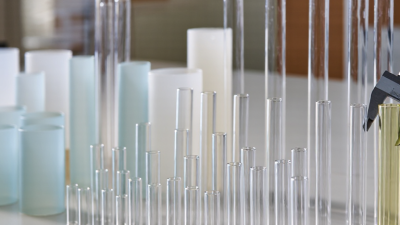
Glass tubes are useful because their properties support careful handling and consistent processes. Their transparency lets staff inspect liquid levels, color changes, bubbles, or residue without opening a system. Clear visibility. This can make routine checks faster, especially where tubing runs behind equipment or through a compact workbench.

Glass also resists many chemicals, though compatibility depends on the glass type, the substance, and exposure conditions. It does not readily absorb odors or stains, which helps when cleanliness matters. Some formulations tolerate repeated heating and cooling better than others. Borosilicate glass, for example, is often selected for its low thermal expansion, but sudden temperature changes can still cause failure. A tube’s dimensions and wall thickness matter, too; a small mismatch may affect fit, flow, or pressure performance.

Smooth inner walls can support steady flow and make residue easier to spot during cleaning. Glass can also keep its shape and clarity over time when used within its limits. Still, glass can break. It may be less suitable where equipment faces frequent impact, vibration, or rough handling. A chipped edge can create a safety concern, so staff should inspect tubes before use and replace damaged pieces. In practice, the best choice depends on the process, not appearance alone.

Industries and Applications That Rely on Glass Tubes

Glass tubes serve laboratories, analytical instruments, lighting systems, and industrial processes where a clear, stable passage for liquids or gases matters. In laboratories, they can hold samples, support heating, or connect small-scale apparatus. In manufacturing, sight and process tubes let operators monitor fluid color, bubbles, or deposits without opening a line. Small details matter.

The need is visible in the scale of laboratory work. The U.S. Centers for Disease Control and Prevention’s CLIA program oversees more than 320,000 laboratory entities in the United States (CDC, CLIA Program). That figure does not mean every lab uses glass tubes; many routine collection systems use plastic. But glass remains useful in selected applications requiring chemical resistance, transparency, or repeated cleaning. Borosilicate glass is often chosen for heat-exposed labware, while the right composition depends on the chemical and operating temperature.

Glass is not automatically the better choice. It can break under impact or sudden temperature change, and a tube’s wall thickness, dimensions, and connection points affect performance. Heat changes everything. A process engineer should check compatibility against actual fluids and cleaning cycles, not just a supplier’s general description. In practice, that small verification step can prevent leaks, damaged samples, or an unexpected replacement order.

How Glass Tubes Support Product Quality and Operational Efficiency

Glass tubes can help businesses protect product consistency while keeping inspection simple. Their smooth, nonporous surfaces resist absorbing many substances, and clear walls let operators spot particles, fill-level differences, or damage before packing. The exact performance depends on glass composition and tube dimensions, so specifications matter. FEVE’s 2022 industry data reported an 80.1% glass-packaging recycling rate in Europe. This supports glass’s circular-material value, though local collection systems affect actual recovery.

Consistent outer diameter and end finish can help tubes move through filling, capping, and labeling equipment with fewer adjustments. That matters on a busy line: a poorly matched tube may jam a guide or need manual correction. Glass also provides a strong barrier against moisture and many gases, helping preserve sensitive contents. Still, it is heavier and can break if mishandled. Efficiency is not automatic; it depends on careful design, incoming inspection, and suitable protective trays.

Tips: Check tube dimensions against equipment tolerances, then test a small production run. Inspect tubes under good lighting and record defects. It sounds basic, but rushed checks can miss chips. Also review shipping damage rates; the packaging itself may need improvement.

Factors to Consider When Choosing Glass Tubes for Your Business

Why Choose Glass Tubes for Your Business?
Factors to Consider When Choosing Glass Tubes for Your Business

When selecting glass tubes, start with the job they must perform. Check the required inner and outer diameter, length, wall thickness, and dimensional tolerance. A tube that looks close may still cause leaks or poor assembly. Fit matters. Consider the contents and operating conditions, too. Confirm chemical compatibility, temperature range, pressure requirements, and exposure to light. Borosilicate glass often handles thermal changes better than ordinary soda-lime glass, but the right choice depends on the application and supplier specifications.

Quality and supply consistency can affect production as much as material choice. Ask for material details, inspection records, and clear tolerance limits. Examine sample tubes under good lighting for chips, cracks, bubbles, uneven walls, or rough ends. These defects can complicate sealing and increase breakage. Discuss packaging and shipping protection, especially for long or thin-walled tubes. Compare total costs, including rejected parts, storage, and replacement time—not only the quoted unit price. One caveat: over-specifying every feature can raise costs without improving performance, so confirm which requirements are essential.

Tips: Write down dimensions and working conditions before requesting quotes. Test a small sample batch on your actual equipment. Keep a few spare tubes; handling damage happens. Record any fit or breakage issues before ordering at scale.

Why Choose Glass Tubes for Your Business? — Factors to Consider When Choosing Glass Tubes for Your Business
Factor Why It Matters What to Evaluate Practical Consideration
Glass composition Different glass compositions have different thermal, chemical, and mechanical properties. Ask whether borosilicate, soda-lime, or another specified glass type suits the application. Borosilicate glass is commonly selected where greater resistance to thermal shock or certain chemicals is needed. Confirm suitability for the specific process and substances involved.
Operating temperature Heating and cooling can create thermal stress, which may cause cracking if the tube is not suitable for the conditions. Check the manufacturer’s temperature guidance, heating and cooling rate, and expected temperature changes. Do not rely on a single temperature rating alone; the glass type, tube dimensions, and temperature gradient also affect performance.
Chemical compatibility Contact with process materials can affect the glass surface or the contents, depending on the chemical and exposure conditions. Review the full list of chemicals, concentrations, temperatures, and contact times. Verify compatibility for the actual operating conditions, especially for strong alkalis, hydrofluoric acid, or other materials known to attack glass.
Dimensions and tolerances Tube size and dimensional consistency influence fit, assembly, flow, and compatibility with filling or processing equipment. Specify outer diameter, inner diameter, length, wall thickness, and allowable tolerances. Provide drawings or sample measurements when the tubes must fit existing equipment or connect to other components.
Wall thickness and strength Wall thickness affects handling, weight, pressure suitability, and resistance to mechanical loads. Consider pressure or vacuum conditions, impact risks, support points, and handling requirements. Glass is brittle and can fail without substantial visible deformation. Have the design reviewed for the intended pressure and use conditions.
Transparency and surface finish Clear glass can support visual inspection, product presentation, and light transmission where required. Determine the required clarity, color, surface finish, and any need for coatings or a specific optical grade. Check whether scratches, surface defects, or tint could affect inspection, measurement, or the appearance of the finished product.
Application and cleanliness Requirements differ between laboratory, industrial, food-contact, pharmaceutical, and other uses. Define cleaning, sterilization, contamination-control, and relevant regulatory requirements for the application. Request documentation demonstrating that the tube and its processing meet the requirements applicable to the intended use.
End finish and processing Cut ends, formed ends, and other finishing details affect assembly, sealing, safety, and handling. Specify whether ends should be cut, fire-polished, formed, or prepared for a particular connection. Confirm that the finish is compatible with the intended closure, fitting, or downstream manufacturing step.
Packaging and transport Glass tubes can chip or break if they move or collide during storage and shipping. Review protective packaging, bundle size, labeling, storage conditions, and delivery handling. Test packaging under realistic transport and warehouse conditions, particularly for long or thin-walled tubes.
Total cost and supply consistency Purchase price is only one part of cost; breakage, rejected parts, lead time, and production interruptions also matter. Compare quoted specifications, inspection criteria, minimum order quantities, lead times, and replacement policies. Use a documented specification and incoming inspection plan to help maintain consistency between orders.