What Is a Tungsten Filament Used For?
What Is a Tungsten Filament Used For? The answer reaches beyond the familiar glow of an incandescent bulb. A Tungsten Filament is a fine wire designed to become intensely hot when electric current passes through it. In traditional lamps, that heat produces visible light. In some scientific instruments and vacuum devices, heated tungsten can also release electrons. Different jobs, one demanding material.
William D. Coolidge’s early work helped make ductile tungsten wire practical. An accurate, non-verbatim summary of his contribution is: “Useful tungsten wire must be both workable and able to endure high temperatures.” That balance matters. Tungsten melts at about 3,422°C, yet a lamp filament still slowly loses material during operation. Inside a bulb, an inert gas or vacuum helps slow that process.
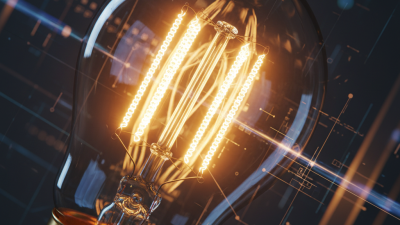
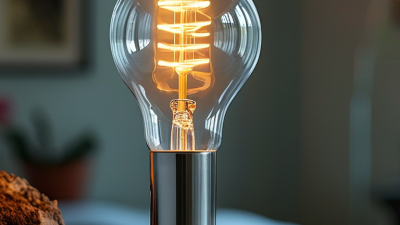
Picture the tiny coiled wire glowing inside a clear bulb. Its diameter, coil shape, and operating temperature affect light output and service life. The filament must heat quickly, but not fail too soon. A difficult compromise.
Tungsten filaments are less common in everyday lighting now, as LEDs use energy more efficiently. Still, they remain relevant in specialty lamps, legacy equipment, and certain electron-emitting applications. Their performance depends on design, atmosphere, and operating conditions—not simply on tungsten’s high melting point. That detail is easy to overlook. A useful guide should explain both what the filament does and where its limits begin.
What a Tungsten Filament Is
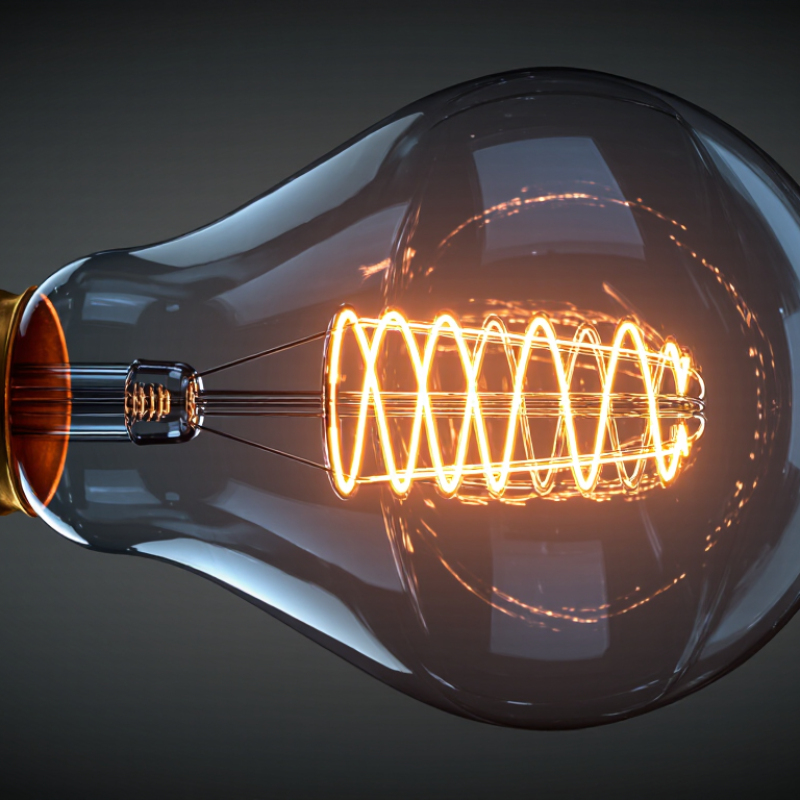
A tungsten filament is a very thin wire made mostly of tungsten, a dense metal with an exceptionally high melting point. In a cool lamp, it looks like a dark, delicate thread. It is not a glowing strip. When electric current passes through the wire, its resistance produces heat, raising the filament to a temperature where it emits visible light.
The wire is usually wound into a tight coil so a useful length fits inside a small bulb. That shape also helps limit heat loss. The sealed bulb contains a vacuum or an inert gas, which slows the filament’s reaction with oxygen.
At operating temperatures, some tungsten still evaporates over time. This gradually thins the wire. That matters. In an older bulb, a gray or black coating on the inner glass can be a visible trace of evaporated tungsten.
The filament’s wire thickness and coil shape affect how it heats, though the fine details are easy to overlook when the lamp simply turns on.
How a Tungsten Filament Produces Light
A tungsten filament produces light by becoming extremely hot. When electric current passes through its thin, coiled wire, electrical resistance generates heat. At around 2,700°C in many incandescent lamps, the glowing metal emits visible light along with infrared radiation. Much of the energy becomes heat, not useful illumination. That is the trade-off.
The filament sits inside a glass bulb, usually surrounded by a vacuum or an inert gas. This limits contact with oxygen, which would quickly damage hot tungsten. Coiling the wire lets a useful length fit into a compact space. As the filament heats, its electrical resistance rises. Repeated heating and cooling can still weaken tiny spots in the wire until it breaks.
Brightness depends on the filament’s temperature and the power supplied. A hotter filament can produce more visible light, but it also tends to wear out sooner and appear whiter. Designers balance brightness, lifespan, and energy use, and that balance is never perfect. Even a small change in supply voltage can noticeably affect how long a filament lasts.
How a Tungsten Filament Produces Light
A representative 2,700 K tungsten filament emits a broad spectrum of thermal radiation. Only part of its output falls within the visible range; much of it is infrared.
The curve is calculated from Planck’s law and normalized to its maximum across the wavelengths shown. Wavelengths from approximately 380 to 700 nm are visible to the human eye.
Common Uses of Tungsten Filaments
Tungsten filaments are used in incandescent and halogen lamps, where electrical current heats a fine wire until it glows. The wire is usually coiled to fit more length into a small bulb. Tungsten tolerates intense heat: NIST lists its melting point at about 3,695 kelvin. That makes it useful where a bright, compact heat source is needed. The glow is familiar. In vacuum tubes and electron instruments, tungsten wire can also serve as a heated source of electrons; in laboratory equipment, it may act as a small heating element.
These uses are specialized, not the main destination for most tungsten. The U.S. Geological Survey’s Mineral Commodity Summaries 2024 estimated global mine production at 78,000 metric tons in 2023 and describes cemented carbides, alloys, and chemicals among major uses. Filaments are a narrower application, valued for heat resistance and dependable performance in demanding conditions. Still, tungsten wire can evaporate gradually during lamp use, thinning the coil and eventually causing failure. The material is not magic. Its practical performance also depends on coil design, atmosphere, and operating temperature.
What Is a Tungsten Filament Used For? - Common Uses of Tungsten Filaments
| Application |
How the Filament Is Used |
Why Tungsten Is Suitable |
Typical Context |
| Incandescent lamps |
Electric current heats a coiled tungsten wire until it glows and produces visible light. |
Tungsten has a very high melting point and can operate at high temperatures in a sealed bulb. |
Traditional household and general-purpose lighting |
| Halogen lamps |
A tungsten filament glows inside a small bulb containing a halogen gas. The halogen cycle helps return evaporated tungsten to the filament. |
Its high-temperature performance supports bright light from a compact lamp. |
Compact lighting, task lights, and some vehicle or projector lamps |
| Vacuum-tube heaters and cathodes |
A tungsten wire may act as a heater or, in some designs, as a thermionic electron-emitting cathode. |
It withstands repeated heating and can emit electrons when sufficiently hot. |
Some electronic tubes and specialized vacuum devices |
| Electron microscopes and electron-beam instruments |
A shaped tungsten filament is heated to release electrons that are accelerated into an electron beam. |
It is a durable, heat-resistant source used in many conventional thermionic electron guns. |
Electron microscopy, electron-beam analysis, and related laboratory instruments |
| Projection and specialty lamps |
A small tungsten filament supplies intense light in a compact lamp assembly. |
It can produce a bright light source from a small, precisely positioned coil. |
Some optical instruments, projectors, and inspection equipment |
Why Tungsten Is Suited to Filament Applications
Tungsten filaments turn electrical current into visible light inside incandescent and halogen lamps.
Their key advantage is heat tolerance. NIST’s Chemistry WebBook lists tungsten’s melting point at
about 3,695 kelvin, or 3,422°C.
That matters. A filament can glow intensely without melting under normal operating conditions.
Tungsten can also be drawn into very fine wire, then coiled to fit inside a small glass bulb. Its relatively low vapor pressure at high temperatures helps slow material loss as the filament glows.
A thinner wire offers little room for error, though.
The coil must withstand repeated heating and cooling, and even small weaknesses can lead to failure.
Tungsten is not a perfect choice. It needs a sealed environment because hot tungsten oxidizes in air, and its high operating temperature wastes energy as heat. The U.S. Department of Energy’s Energy Saver guidance notes that traditional incandescent bulbs release
about 90% of their energy as heat
and produce
about 10% as light.
That trade-off helps explain why tungsten remains useful in specialized high-temperature applications, while ordinary lighting increasingly favors more efficient technologies.
How Filament Design Affects Performance and Lifespan
A tungsten filament is a thin wire heated until it glows inside a lamp. Its shape and thickness influence brightness, energy use, and service life. A tightly wound coil fits more wire into a small bulb, while a double coil can reduce heat loss from the filament. But compact design is not automatically better.
Temperature matters. Running tungsten hotter can produce whiter, brighter light, but it also speeds up evaporation of tungsten atoms. The wire gradually thins, often failing at a weak spot. The U.S. Department of Energy’s 2012 Life-Cycle Assessment of lighting products uses 1,000 hours as the typical rated life for a general-service incandescent lamp. That figure is a useful baseline, not a promise for every design or operating condition.
Wire diameter, coil spacing, and support structure also affect durability. A thicker filament may resist breakage, yet needs more power to reach its operating temperature. Close-wound coils can help limit heat loss, though vibration or repeated switching may still shorten life. Small details count. In practice, the best design balances light output against heat and mechanical stress. I would not judge a filament by brightness alone; the trade-off is easy to miss.