Leave Your Message

What Are the Top China Alloy Wire Manufacturers?

China has become a major sourcing destination for precision Alloy Wire, serving aerospace, electronics, medical, energy, and industrial applications. However, identifying the top China Alloy Wire manufacturers requires more than reading export rankings or polished company profiles. Real performance appears in production details.

A serious comparison should examine nickel alloy, stainless steel, resistance, spring, and high-temperature wire capabilities. It should also assess diameter control, surface finish, tensile strength, heat treatment, and spool consistency. In a factory, these details are visible. Operators check wire with micrometers, inspect coils under bright light, and record batch numbers before shipment.

Metallurgist Dr. George Krauss stated, “The properties of steel are determined by its microstructure.” This principle also matters when evaluating Alloy Wire suppliers. Chemistry alone does not guarantee dependable wire. Drawing schedules, annealing control, cleanliness, and final inspection can change the result.

This guide will compare leading Chinese manufacturers through practical criteria. These include material range, manufacturing experience, laboratory equipment, quality certifications, export history, and technical communication. A supplier may offer excellent pricing, yet struggle with traceability. Another may provide stable quality but require larger minimum orders. Neither detail should be ignored.

The ranking is not absolute. Application requirements differ. A medical wire buyer needs tighter documentation than a general industrial purchaser. Some online claims also remain difficult to verify. That is worth admitting.

By focusing on evidence, this overview aims to help engineers, procurement teams, and distributors make more reliable decisions. The best manufacturer is not always the largest. It is the one that repeatedly delivers the required Alloy Wire specification, in usable condition, with records that withstand careful review.
What Are the Top China Alloy Wire Manufacturers?

Defining China Alloy Wire Manufacturers and Their Product Scope

China alloy wire manufacturers are not limited to companies drawing metal into thin coils. The category includes producers of nickel alloys, stainless steels, copper alloys, and heat-resistant grades. Their scope may cover melting, vacuum refining, hot rolling, cold drawing, annealing, spooling, and inspection. The boundary remains fuzzy.

The World Steel Association reported that China produced approximately 1.01 billion tonnes of crude steel in 2024. That scale supports broad upstream capacity, but it does not prove uniform alloy-wire quality.

The USGS Mineral Commodity Summaries 2024 estimated global nickel mine production at about 3.6 million metric tons in 2023. Nickel availability directly affects many corrosion-resistant and high-temperature wire grades.

Buyers should therefore examine both material origin and processing control.

A capable manufacturer should provide heat numbers, chemical analysis, tensile results, elongation data, diameter tolerances, and surface inspection records. For aerospace, energy, and medical equipment, traceability must continue from billet to finished coil.

ASTM and ISO test methods help, yet certificates can still hide weak sampling practices. In supplier audits, checking a random coil is more revealing than reading a polished brochure.

Product scope should also state diameter ranges, temper conditions, weldability, and minimum order quantities. Some suppliers describe themselves as alloy-wire specialists while outsourcing critical drawing stages. That is not automatically unacceptable, but it deserves verification.

Key Alloy Wire Grades and Manufacturing Capabilities

What Are the Top China Alloy Wire Manufacturers?

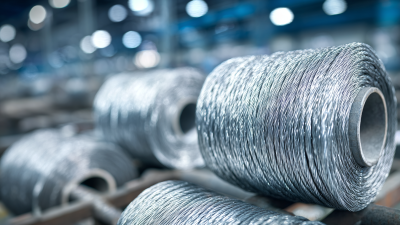
China’s leading alloy wire manufacturers are often judged by grade control, drawing accuracy, and testing discipline. Common grades include nickel-chromium wire, iron-chromium-aluminum wire, and stainless steel wire. Nickel-chromium grades suit heating elements and high-temperature resistance. Iron-chromium-aluminum grades offer strong oxidation resistance in dry furnace atmospheres. Stainless grades support springs, mesh, medical tools, and general industrial parts.

Grade selection needs more than a datasheet. Ask for chemical analysis, tensile strength, resistivity, elongation, and surface inspection records. Reliable factories usually provide heat numbers and traceable test reports. They may work to ASTM, GB, EN, or customer specifications. Small differences in alloy chemistry can change electrical resistance and forming behavior. This detail is easy to miss.

Manufacturing capability matters just as much. Experienced plants commonly use vacuum melting, continuous casting, hot rolling, precision drawing, intermediate annealing, and final cleaning. Fine wire production demands stable dies and careful tension control. Coil weight, straightness, diameter tolerance, and packaging should match the application. Samples reveal more than polished brochures. Sometimes, the first sample exposes an uncomfortable gap between laboratory data and production reality. I would request repeated batches before approving a long-term supply agreement.

Leading China Alloy Wire Manufacturers by Industry Focus

China alloy wire manufacturers often organize production around demanding industries rather than one universal product line. Aerospace-focused factories may emphasize nickel-based wire, tight diameter control, vacuum melting, and batch traceability. Energy suppliers often produce resistance wire or heat-resistant alloys for furnaces, heaters, and power equipment. Their records should show chemical composition, tensile strength, electrical resistivity, and heat-treatment results. Ask for samples cut from actual production lots, not only polished catalog pieces.

Medical and electronics-focused manufacturers usually prioritize clean surfaces, stable dimensions, and controlled packaging. Fine alloy wire may require microscopic inspection, spool consistency, and protection from moisture or contamination. For medical use, buyers should review material certificates, inspection procedures, and applicable quality systems. Electronics projects may need precise resistance values and reliable soldering behavior. Small differences matter here. A supplier’s standard tolerance may still be unsuitable for miniature components.

Industrial heating manufacturers often serve glass, ceramics, laboratory equipment, and thermal processing applications. Their strength lies in selecting alloys that balance operating temperature, oxidation resistance, flexibility, and service life. However, published data can look better than field performance. Request operating-temperature tests, failure records, and clear replacement terms. Factory visits can reveal winding quality, furnace calibration, and worker inspection habits. No supplier fits every project. That assumption deserves review. Cost remains important, but unstable chemistry can create higher maintenance costs later.

What Are the Top China Alloy Wire Manufacturers? - Leading China Alloy Wire Manufacturers by Industry Focus

Industry Focus Common Alloy Wire Types Typical Standards Key Performance Requirements Typical Applications Common Supply Forms
Aerospace and Defense Nickel-based superalloy wire, precipitation-hardening stainless steel wire, cobalt-based alloy wire AMS, ASTM, EN, and customer-specific aerospace specifications High-temperature strength, oxidation resistance, fatigue resistance, and tight dimensional control Engine components, safety wire, fasteners, sensors, and high-temperature assemblies Precision coils, spools, straight lengths, and cut-to-length wire
Automotive and Transportation Stainless steel wire, nickel-chromium resistance wire, spring wire, and high-strength alloy wire ASTM, SAE, JIS, GB/T, and ISO-related specifications Consistent tensile strength, corrosion resistance, springback control, and reliable fatigue performance Valve springs, exhaust systems, heating elements, fuel systems, and electric vehicle components Spools, coils, formed parts, and precision-drawn wire
Electrical Heating and Resistance Nickel-chromium wire, iron-chromium-aluminum wire, nickel wire, and copper-nickel resistance wire IEC, ASTM, DIN, GB/T, and resistance-wire technical specifications Stable electrical resistivity, high operating temperature, oxidation resistance, and uniform diameter Industrial furnaces, household appliances, laboratory heaters, kilns, and heating coils Soft coils, tight coils, straight wire, ribbon, and custom-shaped heating elements
Chemical Processing and Oil & Gas Nickel alloys, nickel-copper alloys, duplex stainless steel wire, and corrosion-resistant stainless steel wire ASTM, ASME, NACE-related requirements, EN, and project specifications Resistance to pitting, crevice corrosion, stress-corrosion cracking, acids, chlorides, and high pressure Filtration, welding consumables, downhole tools, heat exchangers, pumps, and chemical equipment Welding wire, mesh wire, spring wire, cut lengths, and precision coils
Medical and Pharmaceutical Equipment 316L stainless steel wire, cobalt-chromium wire, nickel-titanium wire, and fine medical-grade alloy wire ASTM F-series standards, ISO 13485-related quality systems, and medical-device specifications Biocompatibility, cleanliness, surface finish, fatigue resistance, and precise mechanical properties Guidewires, surgical instruments, orthopedic devices, stents, and pharmaceutical machinery Micro-diameter spools, straight lengths, formed wire, and centerless-ground wire
Welding and Additive Manufacturing Stainless steel welding wire, nickel alloy wire, aluminum alloy wire, titanium wire, and cobalt alloy wire AWS, ASME Section II, ISO, EN, and GB/T welding-material standards Stable feeding, low surface contamination, controlled chemistry, weldability, and consistent deposition MIG/MAG welding, TIG welding, submerged-arc welding, laser deposition, and wire-arc additive manufacturing Precision spools, drums, coils, and sealed low-contamination packages
Electronics and Communication Copper alloy wire, nickel-plated wire, stainless steel fine wire, and phosphor bronze wire IEC, ASTM, RoHS-related material requirements, and electronics-industry specifications Electrical conductivity, solderability, dimensional accuracy, flexibility, and corrosion resistance Connectors, contact springs, cable shielding, electromagnetic components, and precision terminals Fine wire coils, plated wire, miniature spools, and precision-cut lengths
Industrial Filtration and Screening Stainless steel wire, nickel alloy wire, brass wire, and high-temperature alloy wire ASTM, ISO, DIN, and industrial wire-cloth specifications Uniform wire diameter, mesh stability, abrasion resistance, corrosion resistance, and thermal durability Powder screening, pharmaceutical filtration, petrochemical separation, water treatment, and food processing Woven mesh wire, plain coils, crimped wire, and cut-to-length sections

Note: Alloy selection, dimensional tolerances, testing requirements, and certification should be confirmed against the applicable project specification and purchasing standard.

Quality Standards, Certifications, and Production Verification

When evaluating China’s leading alloy wire manufacturers, quality evidence matters more than polished factory photos. A reliable supplier should identify the alloy grade, drawing condition, diameter tolerance, and applicable standard before quoting. Ask for recent test data. Useful records include chemical analysis, tensile strength, elongation, hardness, and surface results from a defined production batch.

Certifications should be checked, not merely displayed. Verify the certificate number, issuing body, expiration date, facility address, and covered processes through the issuer’s database. ISO 9001 supports controlled quality systems, but it does not prove every wire coil meets your specification. Depending on the market, standards such as ASTM, EN, or relevant Chinese GB requirements may apply. Some suppliers present broad compliance claims; these can hide gaps between raw material control and final inspection.

Production verification should connect the sample to the shipment. Request heat or lot numbers, incoming inspection records, furnace logs, drawing schedules, calibration records, and final packing photographs. An independent inspector can witness sampling and repeat key tests before dispatch. During a factory visit, check clean storage, labeled coils, calibrated instruments, and segregated nonconforming material. Small details matter. Unexpected variation still appears. Keep acceptance criteria measurable, and require corrective-action records when results fall outside limits.

Quality Standards and Production Verification for China Alloy Wire Manufacturers

The chart compares the publication year of internationally recognized quality, environmental, occupational-safety, laboratory-competence, and metal-testing standards commonly used when evaluating alloy wire production. Certification and test records should be verified directly with the manufacturer and the issuing body.

Key verification areas include quality management, environmental controls, worker safety, laboratory competence, and tensile testing of metallic materials.

How to Evaluate and Select a China Alloy Wire Manufacturer

Selecting a China alloy wire manufacturer requires more than comparing online prices. Start with the alloy grade, wire diameter, tensile strength, and required surface finish. Ask for the mill certificate and independent test reports. The chemical composition should match your specification, not merely a catalogue description.

Request production samples from the same line used for regular orders. Inspect diameter consistency with calibrated equipment. Check spool weight, winding quality, weld points, and packaging protection. A reliable factory should explain its drawing, annealing, cleaning, and inspection processes clearly. It should also provide batch numbers for traceability.

Visit the facility when possible, or arrange a live video audit. Look at laboratory equipment, raw material storage, and process records. Ask how the manufacturer handles nonconforming wire. The answer reveals more than a sales presentation. Confirm export experience, lead times, minimum order quantities, payment terms, and communication procedures in writing.

Do not trust polished websites alone. They can hide weak controls. A low quotation may exclude testing, special packaging, or tooling costs. This is where selection becomes difficult. Even a capable manufacturer may struggle with urgent changes or small batches. Discuss these risks before signing a purchase agreement. Keep a retained sample from every approved batch, because memory is not a quality system.