Leave Your Message

Best Alloy Wire Manufacturers in China for Global Buyers

Choosing a reliable Alloy Wire manufacturer in China requires more than comparing prices or polished websites. Global buyers must examine production experience, technical capability, quality controls, and communication standards. A supplier may offer attractive quotations, yet inconsistent diameter, weak packaging, or incomplete test documents can create expensive delays.

This guide introduces leading Chinese manufacturers for international procurement teams. It considers alloy selection, wire diameter, tensile strength, surface finish, heat treatment, and dimensional tolerance. These details matter when wire enters aerospace components, electrical equipment, medical instruments, chemical processing systems, or demanding industrial assemblies. Samples should be tested under realistic conditions. A catalogue cannot replace verification.

Look for manufacturers with traceable raw materials, calibrated inspection equipment, and documented production procedures. Certifications can support credibility, but buyers should confirm their scope, validity, and issuing organization. Factory audits, video inspections, and independent laboratory reports may reveal more than marketing language. Ask how each supplier handles nonconforming batches, corrective actions, and urgent replacement requests.

Clear communication matters.

This overview also considers export experience, packaging quality, minimum order quantities, lead times, and after-sales support. Wooden cases, moisture barriers, coil protection, and accurate labels can prevent damage during long-distance transportation. However, no ranking is perfect. Supplier capabilities change, and published information may become outdated. Buyers should confirm current equipment, capacity, certificates, and pricing before signing contracts. Careful comparison creates stronger partnerships and reduces avoidable procurement risks.
Best Alloy Wire Manufacturers in China for Global Buyers

Alloy Wire Categories: NiCr 80/20, CuNi 90/10, and Inconel 625 (≥58% Ni)

For global buyers, Chinese alloy wire manufacturers should be evaluated by alloy control, drawing quality, and export documentation. The category must come before the quotation. NiCr 80/20 wire contains roughly 80% nickel and 20% chromium. It is widely used in resistance heating elements, furnaces, ovens, and industrial heaters. Ask for diameter tolerance, surface condition, tensile data, and resistance per meter. A bright, even surface matters during coiling. Small scratches can become failure points.

CuNi 90/10 wire contains about 90% copper and 10% nickel. It offers moderate electrical resistance, good ductility, and useful seawater corrosion resistance. It suits control resistors, low-temperature heating, and marine-related components. Inconel 625, with nickel at 58% or higher, also contains chromium, molybdenum, niobium, and iron. It serves severe corrosion, heat, and pressure environments. Buyers should request heat numbers, chemical analysis, mechanical results, and dimensional inspection records. Check whether certificates match the actual coil, not a standard template. Review melting routes, drawing reductions, annealing practices, spool weights, and packaging protection. For 625 wire, confirm pitting resistance in the intended medium. For CuNi 90/10, verify conductivity and softness after the requested temper. No alloy is universally ideal. A cheaper wire may create higher replacement costs. Test one production lot before approving recurring shipments. Supplier records can look excellent while batch consistency remains uncertain.

Best Alloy Wire Manufacturers in China for Global Buyers - Alloy Wire Categories: NiCr 80/20, CuNi 90/10, and Inconel 625 (≥58% Ni)

Evaluation Dimension NiCr 80/20 Wire CuNi 90/10 Wire Inconel 625 / Alloy 625 Wire
Material Classification Nickel-chromium resistance alloy Copper-nickel alloy with iron and manganese additions Nickel-chromium-molybdenum alloy with niobium and tantalum additions
Typical Chemical Composition by Mass
  • Nickel: approximately 80%
  • Chromium: approximately 20%
  • Iron and other elements: minor residual amounts
  • Copper: balance
  • Nickel: typically 9–11%
  • Iron: typically 1–2%
  • Manganese: generally not more than 1%
  • Nickel: minimum 58%
  • Chromium: 20–23%
  • Molybdenum: 8–10%
  • Niobium plus tantalum: 3.15–4.15%
  • Iron: maximum 5%
Primary Performance Advantage High electrical resistivity combined with strong oxidation resistance at elevated temperature Good thermal conductivity, ductility, seawater resistance, and resistance to biofouling Excellent resistance to pitting, crevice corrosion, stress-corrosion cracking, and chloride-bearing environments
Approximate Electrical Resistivity at 20°C About 1.08–1.10 Ω·mm²/m, depending on product condition and exact composition About 0.15–0.17 Ω·mm²/m, depending on product condition and exact composition About 1.1–1.3 Ω·mm²/m, depending on material condition and test method
Temperature or Service Guidance Commonly selected for heating elements and resistance wire operating at high temperatures; the permitted temperature depends on atmosphere, wire diameter, loading, and element design Normally used for moderate-temperature electrical, marine, heat-exchanger, and fluid-handling applications rather than high-temperature furnace heating Suitable for severe corrosive and high-temperature service; engineering approval should consider stress, environment, heat treatment, and fabrication condition
Typical Applications
  • Electric heating elements
  • Industrial furnaces and ovens
  • Air heaters and duct heaters
  • Heating coils and resistance assemblies
  • Household and commercial heating equipment
  • Marine piping and seawater systems
  • Heat exchangers and condensers
  • Desalination equipment
  • Shipbuilding components
  • Electrical resistance and control components
  • Chemical processing equipment
  • Oil and gas production components
  • Seawater and offshore systems
  • Flue-gas and pollution-control equipment
  • Aerospace and power-generation parts
Recommended Product Forms Round wire, straightened and cut wire, resistance coils, mesh, and formed heating elements Round wire, flat wire, cut lengths, woven mesh, and formed marine or heat-exchanger components Round wire, welding wire, cut lengths, fine wire, spring wire, and formed corrosion-resistant components
Common Manufacturing Conditions Bright-drawn, annealed, or controlled-resistance condition Annealed, half-hard, or cold-worked condition according to mechanical and forming requirements Solution-annealed or cold-worked condition, selected according to strength, ductility, and fabrication needs
Key Quality-Control Checks Elemental composition, wire diameter, electrical resistivity, tensile properties, surface quality, and dimensional tolerance Elemental composition, diameter, tensile properties, elongation, surface condition, and corrosion-related requirements Elemental composition, tensile properties, hardness, diameter, surface quality, heat-treatment condition, and traceability
Important Purchasing Information Specify target resistance per metre, wire diameter, operating temperature, atmosphere, coil geometry, and required tolerance Specify alloy designation, temper, wire diameter, mechanical properties, seawater exposure, and forming requirements Specify Alloy 625 or UNS N06625 where applicable, product condition, diameter, mechanical requirements, applicable standard, and corrosion environment
Relevant Standards or Designations Purchase specifications should state the agreed chemical, electrical, dimensional, and mechanical requirements because commercial NiCr 80/20 products may be supplied under different national or manufacturer specifications Frequently identified as Cu-Ni 90/10; UNS C70600 is a commonly used designation for wrought 90/10 copper-nickel products UNS N06625 is a widely used designation; applicable ASTM, ASME, EN, or customer specifications should be confirmed before ordering
Best Fit for Global Buyers Projects prioritizing stable electrical resistance, oxidation resistance, and repeatable heating performance Projects requiring a balance of marine corrosion resistance, ductility, thermal conductivity, and moderate electrical resistance Projects requiring high nickel content and advanced corrosion resistance in demanding chemical, offshore, and high-temperature environments
Pre-Shipment Documentation to Request Mill test certificate, chemical analysis, resistance report, dimensional inspection report, packing list, and certificate of conformity Mill test certificate, chemical analysis, mechanical test report, dimensional inspection report, certificate of conformity, and packing list Material test certificate, heat-treatment record where applicable, chemical analysis, mechanical test results, dimensional report, traceability records, and certificate of conformity

Note: Chemical compositions and physical-property values shown above are typical or nominal reference values. Final acceptance should be based on the agreed material standard, product specification, test method, dimensional tolerance, and end-use requirements.
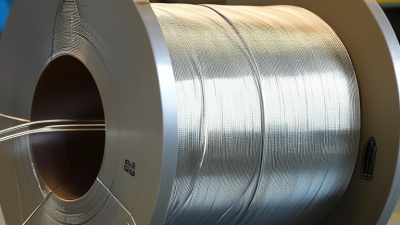

Chinese Alloy Wire Manufacturing: Melting, Drawing, Annealing, and ASTM Controls

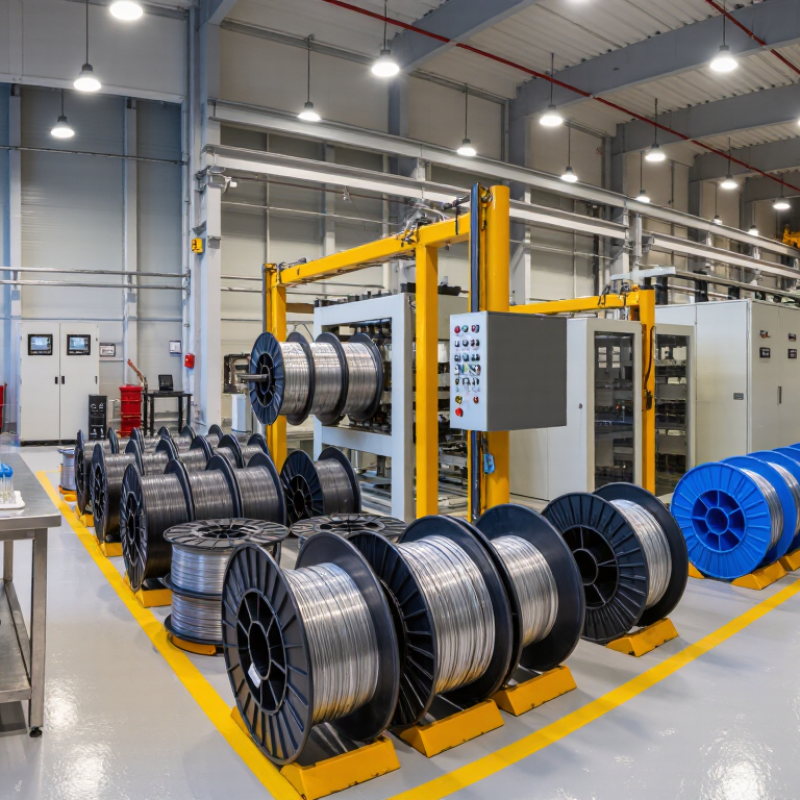
China’s alloy wire manufacturing begins with controlled melting, not simply loading a furnace. Producers weigh nickel, chromium, iron, molybdenum, and other elements against a documented formula. Vacuum melting or inert-gas protection can reduce oxidation and unwanted inclusions. Technicians inspect the molten bath before casting. Small deviations matter.

After solidification, the billet passes through forging, rolling, and precision drawing. Each drawing reduction changes the wire’s diameter, surface, and mechanical response. Operators use calibrated dies and monitor tension continuously. A 0.05-millimeter variation can affect spring performance or electrical contact reliability. Cooling water must remain clean, stable, and properly filtered.

Annealing restores ductility after repeated reductions. Temperature, holding time, and furnace atmosphere require careful control. Bright annealing can protect the surface from scale, but it demands consistent gas conditions. Testing should cover chemical composition, tensile strength, elongation, hardness, resistivity, and dimensional tolerance. ASTM methods provide a useful framework, yet certificates deserve close review. Buyers should request heat numbers, inspection records, sample results, and packaging photographs. Traceability should continue from the melt to each coil.

The process is not perfectly tidy. One weakness may be incomplete communication between production and inspection teams. That risk deserves attention. Experienced suppliers compare internal results with independent laboratory testing when specifications are critical. They also explain deviations instead of hiding them. For global buyers, clear records and repeatable controls often matter more than attractive claims.

Manufacturer Evaluation: ISO 9001, ASTM Compliance, Traceability, and Diameter Tolerances

Global buyers evaluating Chinese alloy wire manufacturers should inspect evidence, not polished claims. During factory visits, I check whether ISO 9001 procedures appear on the production floor. Operators should understand inspection records, calibration dates, and corrective actions. A certificate alone proves little. It may be valid, yet poorly applied.

ASTM compliance needs a clear material specification and test method. Ask for recent tensile, resistance, chemical composition, and surface-quality reports. Compare the reported values with your required grade and application. Traceability should connect each coil to a heat number, batch record, and inspection result. Labels should remain readable after handling. Small details matter.

Diameter tolerance deserves practical testing. Request measurements from the beginning, middle, and end of several coils. Use calibrated micrometers, not visual estimates. Check multiple angles because ovality can hide behind an acceptable average. A supplier may report ±0.01 millimeters, but actual production can vary under changing drawing speeds. This is where evaluation becomes less comfortable. Sampling cannot reveal every defect. I would record that limitation instead of promising certainty. Ask for retained samples, packing photographs, and a response plan for out-of-tolerance wire. Consistent documentation builds confidence, but repeat verification still matters.

Top Supplier Comparison: Tensile Strength, Electrical Resistivity, MOQ, and Lead Time

When global buyers compare alloy wire manufacturers in China, four figures deserve equal attention: tensile strength, electrical resistivity, MOQ, and lead time. A high tensile value may indicate durable wire, but it does not guarantee stable drawing quality. Ask for test results from the offered heat or lot. I have found mill certificates useful, yet independent sampling reveals more. Check gauge tolerance, surface marks, and coil weight before approving volume.

Electrical resistivity should match the application temperature, not only the room-temperature figure. Resistance alloy wire can drift after heat treatment, while spring alloy wire may lose strength after repeated forming. Request values in ohm-millimeter squared per meter and ask how they were measured. Small differences matter in heating elements. They affect wattage and operating temperature. This comparison is often overlooked.

MOQ and lead time expose a supplier’s practical flexibility. Stocked diameters may ship within two to four weeks, while custom alloy chemistry can require six to ten weeks. Treat these as planning estimates, not promises. A low MOQ sounds attractive, but setup charges may raise the real unit cost. I would request a pilot coil, packaging photos, and a written schedule. Some quotations remain vague about holidays, retesting, or rejected material. That gap deserves direct questions before any purchase order.

Alloy Wire Material Comparison for Global Buyers

Typical engineering and procurement benchmarks for commonly purchased resistance and heating alloy wires

Alloy Grade Typical MOQ Typical Lead Time Common Application
NiCr 80/20 50–100 kg 3–6 weeks Heating elements, appliances, industrial furnaces
NiCr 60/15 50–100 kg 3–6 weeks General-purpose heating wire and resistance coils
FeCrAl 0Cr21Al6 50–100 kg 4–8 weeks High-temperature furnaces and industrial heating systems
CuNi 44 25–50 kg 3–5 weeks Precision resistors, shunts and low-temperature resistance applications

Tensile strength and electrical resistivity are representative room-temperature values for standard commercial wire conditions. Actual results vary with wire diameter, heat treatment, cold reduction, chemistry and applicable standards. MOQ and lead-time figures are practical planning ranges for export orders and should be confirmed against the required diameter, tolerance, packaging and certification.

Global Buyer Checklist: EN, ASTM, RoHS, REACH, Packaging, and Inspection Data

Best Alloy Wire Manufacturers in China for Global Buyers

Global buyers should assess alloy wire suppliers through documented evidence, not polished catalogues. Request the exact EN or ASTM standard, grade, diameter range, and heat treatment condition. A capable manufacturer should provide current chemical analysis, mechanical results, and batch traceability. Check whether the test report matches the shipped coil number. Small mismatches can create expensive delays.

RoHS and REACH compliance also require careful review. Ask for material declarations, restricted-substance data, and the report issue date. Compliance claims should identify the tested product, not only the factory. Packaging deserves equal attention. Confirm coil weight, inner diameter, wrapping layers, moisture protection, wooden-case treatment, and shipping marks. Inspection data should include diameter tolerance, tensile strength, elongation, surface condition, and sampling rules. Photos before loading can reveal loose coils or damaged labels.

Tips: Use a pre-shipment inspection when specifications are critical. Compare measured values with the purchase order. Do not rely on one certificate. An independent laboratory can verify chemistry and mechanical properties. In practice, even experienced buyers miss packaging details. I once treated clear labeling as sufficient evidence; it was not. Ask who collected the samples, when they were tested, and whether the report covers every production lot. A reliable supplier should answer directly and correct unclear records.