2026 Best LED Lighting for Global Buyers
Choosing the right LED Lighting in 2026 means looking beyond brightness and price. A warehouse needs broad, even coverage; a hotel lobby may need warmer light and accurate color. Small details matter. A driver’s performance, heat management, and dimming compatibility can affect comfort and service life. Buyers should compare measured light output, efficacy, color temperature, and color rendering rather than relying on packaging claims alone.
Global purchasing adds another layer. Supply voltage, plug or wiring requirements, product certifications, and warranty support can differ by destination. Ask suppliers for current test reports and clear product specifications. Check whether the stated protection rating suits the actual installation, especially in damp or dusty spaces. Samples help. A quick bench test can reveal flicker, uneven color, or a finish that looks different from its photos. These checks do not guarantee trouble-free use, but they make decisions more informed.
There is no single best fixture for every project. Even a careful checklist can miss how light feels in a real room. That part deserves attention. This guide compares practical options for homes, offices, retail spaces, and industrial settings, with an emphasis on performance, reliability, and total ownership cost. It also considers supplier communication and after-sales support, which may matter as much as a strong specification sheet. Some product data is difficult to compare across brands, so buyers should verify important claims independently and leave room for uncertainty. A promising product still needs to fit the space, the budget, and the people using it.
How LED Lighting Technology Works in 2026
2026 Best LED Lighting for Global Buyers
How LED Lighting Technology Works in 2026
An LED produces light when electric current passes through a semiconductor junction. Its driver converts incoming power into controlled current, helping the diode operate steadily. In many white LEDs, a phosphor layer changes some blue light into a broader spectrum. This blend influences color temperature and color rendering.
Small parts matter.
Heat does not disappear; it travels from the LED chip through a circuit board and heat sink into the surrounding air. Poor thermal design can reduce light output and shorten service life, especially inside enclosed fixtures. Optics shape the beam, while dimming electronics affect smoothness and flicker. A label alone cannot confirm performance. Compare measured lumen output, efficacy, color rendering index, color temperature, and operating conditions. Published figures do not always predict results in a real room, so installation details deserve attention.
Tips: Check the fixture’s voltage and frequency requirements, then confirm dimmer compatibility before ordering. For a warehouse aisle, compare beam angle and mounting height, not just wattage. Request credible test data, and treat vague lifetime claims cautiously.
Main LED Lighting Types and Their Applications
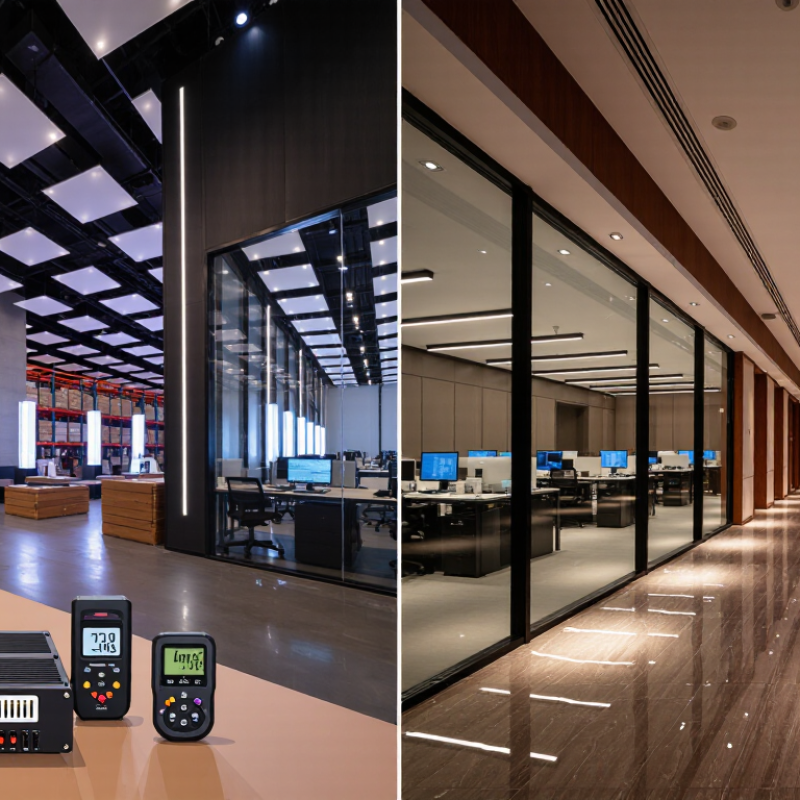
LED lighting selection should begin with the task, not the fixture’s appearance. High-bay lights suit warehouses with tall ceilings, where even illumination helps workers read labels and spot obstacles. Linear fixtures work well over production benches and supermarket aisles. In offices, panels spread light across desks and can reduce harsh shadows, though poor placement may still cause screen glare.
Downlights provide a neat ceiling layout in corridors, hotels, and homes. Track lights suit galleries and retail displays because their heads can aim at shelves or individual objects. Outdoor floodlights cover loading zones and entrances; sealed, weather-resistant housings matter where rain and dust are common. Check color temperature, glare control, dimming compatibility, and mounting height. These details are easy to overlook. Confirm voltage range and installation requirements with a qualified electrician.
Tips: Request photometric data and compare the beam spread with a site plan. Check driver specifications and warranty terms, too. Test a sample first. Its light color may differ from product photos. The brightest option is not always the most comfortable, and even a careful lighting plan can miss the mark.
Key Performance Factors for Comparing LED Products
2026 Best LED Lighting for Global Buyers
Key Performance Factors for Comparing LED Products
Comparing LED products starts with the actual task: a warehouse aisle, a hotel room, and an outdoor loading area need different light. Check luminous efficacy in lumens per watt, but do not judge efficiency alone. Color temperature affects the room’s feel, while color rendering helps reveal material colors accurately. For detailed retail displays, compare color-rendering data and inspect a lit sample. A tidy specification sheet is not the whole story.
Reliability depends on details that may be easy to overlook. Ask how the product manages heat, and check whether its driver and rated operating conditions suit your installation. Look for test reports covering flicker and output, plus a clearly stated warranty. For damp or dusty locations, verify the ingress-protection rating against the real environment. One sample cannot prove batch consistency; I would request more evidence before a large order.
Tips: Compare products under the same conditions. Note light output, color, power use, and dimming behavior. Watch for visible flicker when dimmed. If a claim is unclear, ask for its test method. Small differences matter. A lower purchase price can be tempting, but replacement labor and access equipment may cost more later. Keep the comparison practical, and leave room to revise your choice when site conditions differ from the plan.
Regional Standards and Certifications for Global Buyers
Choosing LED lighting for global markets means checking the rules for each destination, not relying on one certificate. In the European Union, buyers commonly review CE marking, RoHS restrictions, and relevant EN standards. In Great Britain, confirm whether UKCA requirements apply to the product and sales route. For North America, check that the exact model has an accepted safety listing and meets applicable electromagnetic compatibility requirements. Different market. Different paperwork.
Start with the luminaire’s label, driver, and installation instructions. They should identify the model and electrical ratings consistently. A certificate for a similar-looking fixture may not cover the same driver or wiring. Small detail, big consequence. Ask suppliers for current test reports and verify that the testing body is appropriately accredited. For Australia, check applicable RCM requirements; for Japan, determine whether PSE rules cover the product category. Requirements can change, and product type matters. A mark alone does not prove suitability for every site. I would also check dimmer compatibility, emergency-lighting rules, and local plug or voltage conditions before ordering. These checks take time, and paperwork can still leave questions. Record the documents reviewed and resolve unclear scope with a qualified local compliance professional.
How to Evaluate LED Suppliers and Select the Right Products
Selecting LED products for a global project starts with the conditions at the installation site. A warehouse with high ceilings needs different optics from a small retail display. Define mounting height, operating hours, ambient temperature, and target brightness before requesting quotes. Ask suppliers for photometric files, product specifications, and clear explanations of test conditions. Compare efficacy, color rendering, color temperature, and lumen maintenance, not just the initial price.
Tips: Request a sample and test it in the intended space. Check beam spread, glare, and color consistency. Confirm packaging dimensions, lead times, and warranty terms in writing. Small details matter.
Evaluate suppliers as carefully as their products. Review quality-control procedures and ask how production batches are checked. Verify that stated certifications apply to the exact model and target market; a document for a similar product is not enough. Discuss replacement parts and technical support across time zones.
In practice, quotations can look complete while leaving key assumptions unclear. Ask direct questions, then record the answers.
No checklist catches everything. A pilot installation may reveal issues that product sheets cannot, such as uneven light on shelving or unexpected glare near a workstation.