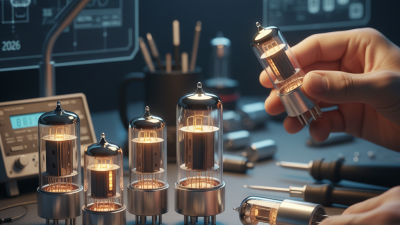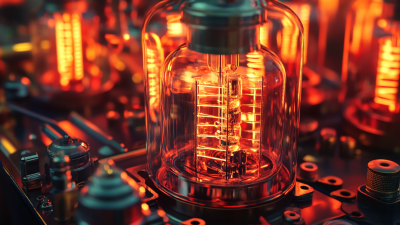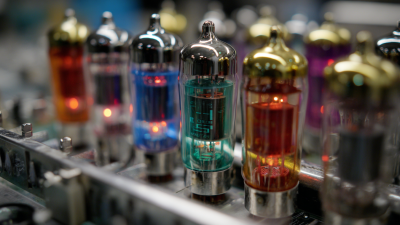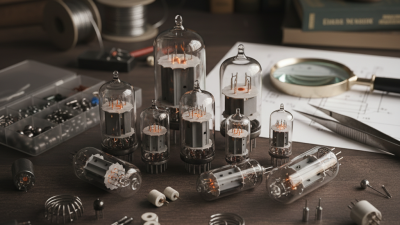
Choosing the right Electron Tube Parts requires more than comparing prices and product photos. Global buyers must examine construction, electrical ratings, compatibility, supply history, and documentation. A tube socket that looks suitable may fail under heat, vibration, or repeated maintenance.
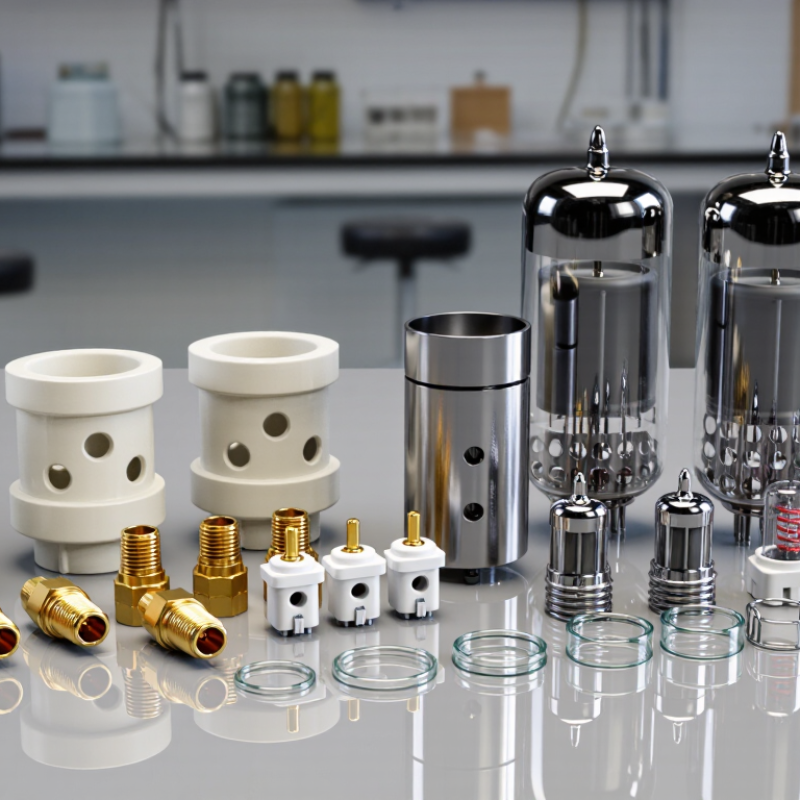
This guide introduces ten common Electron Tube Parts types used in audio equipment, test instruments, communication systems, and industrial electronics. It covers sockets, shields, anode caps, ceramic supports, heater components, connectors, seals, and related accessories. Each category deserves practical attention. Materials matter. Tolerances matter. So does the supplier’s testing process.
Real purchasing decisions are rarely perfect. Some listings use incomplete specifications. Older parts may have limited traceability. Even experienced engineers can overlook a small dimension or pin arrangement. Buyers should confirm drawings, operating conditions, packaging methods, and replacement availability before placing orders. Independent inspection can reduce costly surprises. Keep records.
The discussion reflects common sourcing practices and engineering checks, not a substitute for professional evaluation. Regional standards and equipment requirements may differ. A reputable supplier should provide clear technical data, consistent samples, and responsive answers. These details help buyers distinguish a dependable component from a merely similar one. The goal is practical confidence, supported by evidence rather than assumptions.
Top 10 Electron Tube Parts Types for Global Buyers
Electron tube parts are easier to source when grouped by function, not appearance. The taxonomy contains ten types across three systems.
The emission system includes cathodes, heaters, filaments, and electron guns. These parts create and launch electrons. The control and transport system includes control grids, screen grids, suppressor grids, and anodes or plates. They regulate current, focus movement, and collect electrons. The interface and protection system includes tube bases and ceramic or metal seals.
Small parts. Serious consequences.
This structure helps buyers compare temperature ratings, material stability, dimensional tolerance, and replacement compatibility. A 2024 vacuum-tube market assessment identifies communication, industrial, medical, and audio applications as continuing demand areas. However, market reports often classify products by application, not by internal part type. That gap can confuse purchasing teams. It deserves more attention.
The Global E-waste Monitor 2024 reported 62 million tonnes of electronic waste generated in 2022, with only 22.3% formally collected and recycled.
For global buyers, durable seals, serviceable sockets, and traceable materials are practical priorities. Supplier documentation should include inspection records and test conditions. Parts may look identical. Their performance may not be. I would also question whether a low unit price reflects real value when heater life, insulation quality, and replacement frequency remain unclear.
Top 10 Electron Tube Parts Types for Global Buyers
Cathodes and heaters are the thermal core of many electron tubes. Their emission temperatures commonly exceed 1,000°C, demanding careful material selection and assembly control. Technical references from the IEC 60151 series describe measurement methods for tube characteristics, while ASM Handbook data lists tungsten’s melting point near 3,422°C. This explains its use in high-temperature heater structures.
Directly heated cathodes can reach operating temperatures around 1,000–1,200°C. Indirectly heated designs separate the heater from the emitting surface, improving electrical isolation and reducing contamination risks. Barium-strontium-calcium oxide coatings support electron emission at lower temperatures than bare metals. The coating still needs uniform activation. Tiny defects matter.
Buyers should inspect heater resistance, warm-up time, insulation leakage, and cathode coating consistency. NASA materials data also shows why thermal expansion deserves attention; dissimilar metals can develop stress during repeated heating cycles. A heater may look perfect and still fail after many cycles. That is an uncomfortable reality.
The IEC 60151 approach supports repeatable electrical testing, but test results depend on fixture accuracy and conditioning history. Suppliers should request emission-current curves, heater-to-cathode insulation data, and temperature stability records. Some specifications remain vague. Ask for measured data, not optimistic wording.
| Rank | Part Type | Typical Material or Construction | Typical Operating or Emission Temperature | Heating Method | Common Electron-Tube Applications | Key Buyer Considerations |
|---|---|---|---|---|---|---|
| 1 | Oxide-Coated Cathode | Nickel or nickel-alloy base coated with alkaline-earth oxides, commonly barium, strontium, and calcium oxides. | Approximately 700–1,050°C | Usually indirectly heated by an insulated heater inside the cathode sleeve. | Receiving tubes, small-signal tubes, audio tubes, and many low-to-medium power thermionic devices. | Check coating uniformity, activation condition, cathode dimensions, emission stability, and heater-to-cathode insulation. |
| 2 | Thoriated-Tungsten Cathode | Tungsten containing a small thorium addition; thorium migrates toward the surface during activation and improves electron emission. | Approximately 1,700–2,000°C | Directly heated by passing current through the cathode filament. | High-power transmitting tubes, power rectifiers, industrial oscillators, and rugged high-temperature tubes. | Evaluate filament diameter, thorium content, tensile strength, activation process, and emission uniformity. |
| 3 | Pure-Tungsten Cathode | High-purity tungsten wire, strip, or formed filament with no oxide coating. | Approximately 2,200–2,700°C | Directly heated; the filament itself serves as the electron-emitting cathode. | High-temperature vacuum tubes, specialized power tubes, electron sources, and legacy high-voltage applications. | Confirm recrystallization resistance, filament sag, mechanical strength, vacuum compatibility, and required drive current. |
| 4 | Dispenser Cathode | Porous refractory-metal matrix, often tungsten-based, impregnated with an alkaline-earth emission compound. | Approximately 900–1,200°C at the emitting surface | Commonly indirectly heated with a high-temperature heater assembly. | High-current-density tubes, microwave tubes, traveling-wave tubes, klystrons, and specialized power devices. | Review porosity, impregnant formulation, emission current density, warm-up time, and storage requirements. |
| 5 | Impregnated Cathode | Porous tungsten or tungsten-alloy body filled with barium-calcium-aluminate or a related alkaline-earth compound. | Approximately 1,000–1,300°C | Generally indirectly heated through a refractory-metal heater and ceramic insulation system. | High-power radio-frequency tubes, microwave amplifiers, radar tubes, and long-life electron sources. | Important specifications include emission capability, activation profile, cathode loading, operating life, and thermal uniformity. |
| 6 | Directly Heated Cathode Filament | Emission-active wire or ribbon that combines the heater and cathode functions in one component. | Approximately 1,000–2,000°C, depending on material and coating | Direct current or alternating current flows through the emitting filament. | Battery tubes, rectifiers, transmitting tubes, compact valves, and applications requiring rapid warm-up. | Check filament voltage, current, length, sag control, electrical isolation requirements, and tolerance at operating temperature. |
| 7 | Indirectly Heated Cathode Sleeve | Nickel or nickel-alloy cylindrical sleeve with an internal insulated heater and an external emission coating. | Cathode surface typically 700–1,100°C | Heater is electrically isolated from the cathode and transfers heat through insulation. | Audio amplifiers, radio receivers, control tubes, television tubes, and general-purpose valves. | Specify sleeve diameter, wall thickness, heater voltage, insulation resistance, concentricity, and thermal response. |
| 8 | Tungsten-Rhenium Heater Wire | Tungsten alloyed with rhenium to improve ductility, strength, and resistance to deformation at elevated temperature. | Approximately 1,000–2,000°C in heater service | Used as a resistive heater inside an insulated cathode structure. | High-temperature indirectly heated cathodes, power tubes, microwave tubes, and demanding vacuum-electronic assemblies. | Assess wire diameter, alloy composition, resistance tolerance, weldability, sag resistance, and thermal cycling performance. |
| 9 | Molybdenum Heater Support and Lead Parts | Molybdenum wire, ribbon, rods, or formed supports used for heater anchoring and electrical connection. | Approximately 800–1,500°C in typical tube assemblies | Supports and connects the heater while maintaining dimensional stability in vacuum. | Power tubes, transmitting tubes, cathode assemblies, and high-temperature vacuum devices. | Verify purity, geometry, thermal expansion behavior, weld compatibility, surface cleanliness, and mechanical rigidity. |
| 10 | Alumina Heater Insulator | High-purity aluminum oxide ceramic beads, tubes, sleeves, or coatings used to electrically isolate the heater. | Commonly rated for 1,000–1,700°C service, depending on grade and design | Provides insulation between the heater, cathode sleeve, and supporting components. | Indirectly heated cathodes, high-temperature heaters, microwave tubes, and high-voltage vacuum assemblies. | Consider alumina purity, dielectric strength, thermal shock resistance, dimensional accuracy, porosity, and vacuum outgassing. |
Control grids and electrodes are the working core of many electron tubes. They regulate electron flow, gain, heat, and signal stability. For global buyers, these parts deserve more attention than ceramic shells or external terminals.
The control grid sits between the cathode and anode. A small voltage change can create a much larger current change. This relationship defines transconductance and practical gain. The screen grid reduces capacitance and supports higher operating voltage. The suppressor grid limits secondary electrons, protecting output stability. Three grids, three different jobs.
A 2024 market assessment by Grand View Research estimates the vacuum tube market will grow at about 5% annually through 2030. The report also identifies communication, radar, and industrial equipment as major demand areas. These applications require consistent electrode spacing and low emission variation. IEC 60151 measurement standards help buyers compare tube performance across suppliers. Still, reports simplify reality. Batch variation remains a serious concern. During sourcing, request emission curves, grid-to-grid spacing data, insulation tests, and aging results. A grid that looks perfect under inspection may drift after extended heating. That detail is easy to overlook.
Anodes and collectors rank among the most demanding parts in electron tubes. Their dissipation ratings can range from a few watts to several megawatts. The rating describes heat handling, not always useful output power. An anode receives accelerated electrons and converts much of their energy into heat. A collector captures the remaining beam, especially in high-power or multi-stage tubes. Continuous operation requires stronger cooling than short pulses. Air cooling may suit low-power assemblies, while liquid cooling supports denser thermal loads.
Global buyers should examine voltage, current, duty cycle, cooling method, and mounting dimensions together. A component rated for megawatt service may fail quickly without the correct coolant flow. Material choice also matters. Copper alloys, refractory metals, and coated surfaces offer different thermal and emission behavior. From practical inspections, discoloration near joints often signals excessive temperature or uneven cooling. It is not definitive, but it deserves investigation. Supplier traceability, dimensional reports, vacuum test data, and replacement compatibility improve purchasing reliability.
Tips: Ask whether the rating is continuous, pulsed, or peak. Request thermal resistance data and recommended flow rates. Check collector alignment before installation. Small gaps matter. Compare the part against the tube’s operating envelope, not one headline number. A careful buyer should also question unclear test conditions, because published ratings can vary between laboratories. Even experienced engineers sometimes overlook installation losses, so independent verification remains worthwhile.
Representative continuous dissipation levels for common electron-tube anodes and collectors range from a few watts in receiving tubes to approximately one megawatt in high-power microwave collector systems. Actual ratings depend on cooling method, duty cycle, voltage, current, frequency, and tube construction.
For electron tubes operating below 10⁻⁶ Torr, vacuum seals deserve careful attention. Ceramic-to-metal and glass-to-metal seals must tolerate thermal cycling without creating microleaks. Ask suppliers for helium leak-rate data, material certificates, and tested pressure ranges. A seal can look perfect and still fail during bakeout.
Sockets are more than mechanical holders. Their pin layout, insulation resistance, contact force, and temperature rating affect signal stability. Choose materials with low outgassing and adequate creepage distance. Some designs use spring contacts, while others rely on machined sockets for repeated servicing. Both can work. Poor alignment cannot.
Enclosures protect the tube from vibration, contamination, and accidental contact. Stainless steel, nickel alloys, ceramics, and selected glass materials are common choices. Check wall thickness, flange dimensions, surface finish, and internal clearance around the cathode, grid, and anode. Other important parts include cathodes, heaters, grids, anodes, shields, feedthroughs, getter supports, and mounting hardware. Each part can influence vacuum integrity.
Measure it twice.
Practical procurement should include dimensional drawings, thermal expansion data, outgassing results, and batch traceability. I have seen buyers focus on price and overlook seal compatibility. That decision often creates expensive rework. Specification sheets also need clearer test conditions; “high vacuum” is not precise enough. Ask how the component was cleaned, baked, inspected, and verified below 10⁻⁶ Torr.