Leave Your Message
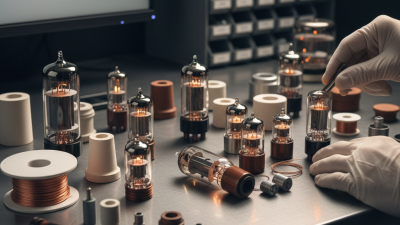
Choosing reliable Chinese suppliers for Vacuum Tube Parts requires more than comparing prices or browsing polished catalogs. A supplier may offer ceramic bases, anode assemblies, mica spacers, grid wires, getter components, and replacement pins, yet product consistency remains the real test. This guide introduces leading supplier types and explains how experienced buyers evaluate them. We focus on material quality, machining accuracy, electrical stability, packaging, and communication. Details decide. A dependable manufacturer should provide drawings, tolerances, sample records, and clear answers about production capacity. Photos help, but inspection data matters more.
The discussion also considers practical evidence from procurement, including how parts survive vibration, humidity, heat cycling, and repeated assembly. A useful supplier should understand tube construction, not merely quote a part number. Look for traceable materials, controlled processes, inspection reports, and sensible quality agreements. Independent sampling or third-party testing can reveal plating defects, loose pins, warped ceramics, or dimensional drift before a costly production run. That matters. However, no ranking stays perfect for every application. A small specialist may outperform a larger exporter on custom parts, while a high-volume factory may offer stronger delivery capacity. This is where judgment becomes necessary. We will compare capabilities, certifications, communication habits, minimum orders, lead times, and after-sales support without treating marketing language as proof. Readers should verify current information directly, request samples, and assess compliance with applicable safety and trade requirements. The goal is a practical, evidence-based starting point for selecting China Vacuum Tube Parts suppliers with confidence, while acknowledging that supplier performance can change over time.
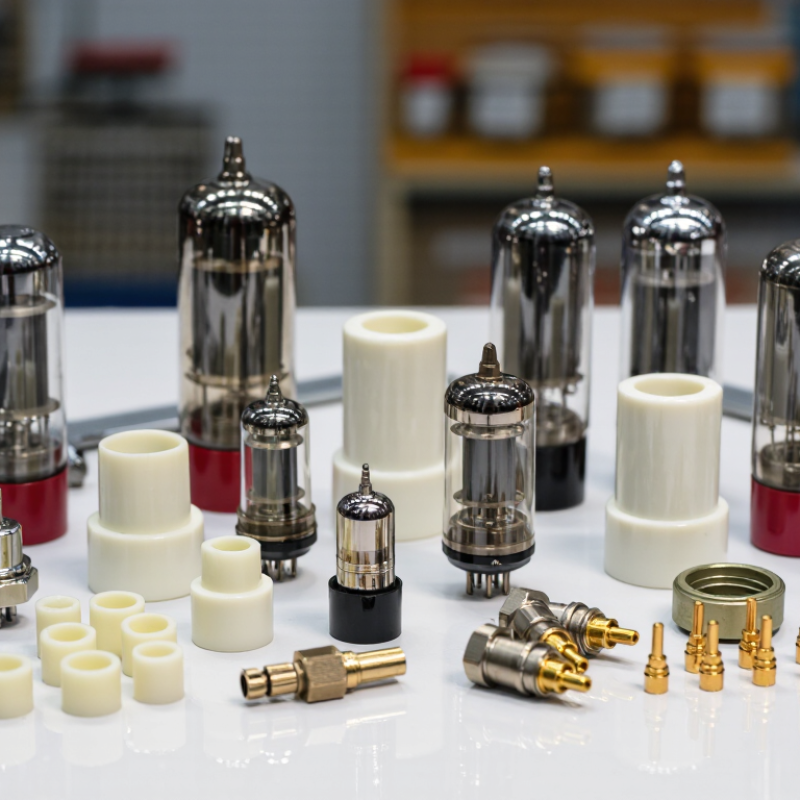
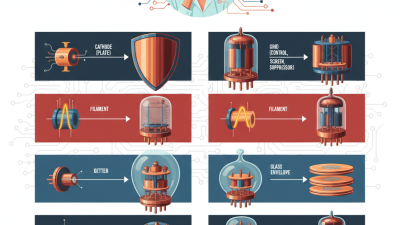
China’s vacuum tube parts suppliers serve audio, measurement, medical, and industrial equipment manufacturers. Their catalogs usually include cathodes, anodes, grids, heaters, ceramic insulators, glass envelopes, sockets, and metal seals. Each part has a specific function. The cathode emits electrons. The anode collects them. Control grids regulate current and amplification.
IEC 60050 terminology helps buyers describe these parts accurately. Terms such as “electron tube,” “cathode,” “control grid,” and “heater” reduce misunderstandings during technical discussions. A 2024 market assessment by Grand View Research reports continued growth in the global vacuum tube sector, supported by high-power radio-frequency systems and specialized audio equipment. However, market reports often combine complete tubes with components. This distinction needs checking. A supplier may show strong sales figures without revealing its parts capability.
Tips: Request dimensional drawings, material certificates, heater-current data, and leakage-test results. Ask whether parts are molded, machined, stamped, or assembled. During factory audits, inspect ceramic edges and metal-to-glass joints under magnification. Small cracks can appear after thermal cycling. In my experience, sample testing is more reliable than catalog claims. Still, one sample cannot represent every production batch. Buyers should compare at least three lots and record temperature, voltage, and test duration. Suppliers familiar with IEC 60050 terminology usually answer faster, but terminology alone does not prove process control.
| Part or Supply Category | Common Materials | Primary Function | Relevant IEC 60050 Terminology | Typical Technical Requirements | Common Tube Applications | Supplier Evaluation Data |
|---|---|---|---|---|---|---|
| Cathode Sleeve | Nickel or nickel-based alloy; coated with alkaline-earth oxides such as barium, strontium, and calcium compounds | Provides the emitting surface from which electrons are released when heated. | Cathode Thermionic emission | Uniform wall thickness, controlled coating mass, stable emission, and compatibility with the heater and vacuum environment | Receiving tubes, transmitting tubes, microwave tubes, and industrial electron tubes | Material certificates, coating uniformity records, emission-current test data, dimensional inspection, and batch traceability |
| Heater or Filament | Tungsten, tungsten alloy, nickel-chromium alloy, or insulated heater wire | Raises the cathode to its operating temperature for thermionic electron emission. | Heater Filament | Specified heater voltage and current, adequate insulation, low open-circuit risk, and stable thermal performance | Indirectly heated valves, directly heated power tubes, rectifiers, and signal tubes | Resistance measurement, heater-to-cathode insulation testing, thermal cycling, weld quality, and rated-life data |
| Control Grid | Nickel, nickel-iron alloy, molybdenum, or molybdenum-based wire | Controls electron flow between the cathode and anode, enabling amplification or switching. | Grid Control electrode | Accurate pitch and wire diameter, low parasitic capacitance, precise alignment, and reliable spot-welded connections | Triodes, tetrodes, pentodes, audio amplifiers, RF amplifiers, and oscillators | Pitch inspection, concentricity, wire tensile strength, weld-pull testing, electrode alignment, and contamination control |
| Screen and Suppressor Grids | Nickel, molybdenum, or nickel-iron alloys | Improve tube performance by reducing interelectrode capacitance, secondary-emission effects, or unwanted electron feedback. | Screen electrode Suppressor electrode | Stable grid geometry, correct spacing, low distortion, and reliable electrical isolation from adjacent electrodes | Tetrodes, pentodes, beam-power tubes, RF power tubes, and audio output tubes | Geometry measurement, electrode-spacing inspection, insulation testing, vibration resistance, and process capability data |
| Anode or Plate | Nickel, nickel-plated steel, graphite, molybdenum, or copper-based materials for high-power designs | Collects electrons and dissipates the heat generated by electron current. | Anode Plate | Defined electrical loading, adequate heat dissipation, dimensional stability, and resistance to deformation during processing | Rectifier tubes, transmitting tubes, power amplifiers, X-ray tubes, and industrial high-voltage tubes | Material composition, surface finish, thermal-load testing, dimensional inspection, brazing or welding quality, and outgassing control |
| Mica or Ceramic Insulator | Natural mica, alumina ceramic, steatite, or other high-temperature insulating ceramics | Supports electrodes and maintains electrical insulation and mechanical spacing inside the tube. | Insulating part Supporting member | Low dielectric loss, high-temperature stability, accurate apertures, low moisture absorption, and crack-free surfaces | Small-signal tubes, power tubes, microwave tubes, and high-voltage assemblies | Dielectric-strength testing, dimensional accuracy, thermal-shock testing, visual inspection, and moisture-control records |
| Glass Envelope | Borosilicate glass, soft glass, or matched glass formulations selected for thermal and electrical compatibility | Seals the internal structure, maintains the vacuum, and provides electrical insulation and mechanical protection. | Envelope Vacuum enclosure | Controlled wall thickness, low-defect surface, compatible thermal-expansion behavior, reliable seals, and pressure resistance | Receiving tubes, rectifiers, audio tubes, phototubes, and laboratory electron tubes | Leak-rate testing, thermal-shock testing, dimensional inspection, seal-strength testing, and glass composition control |
| Metal-to-Glass Seal | Matched-expansion alloys, nickel-iron sealing alloys, nickel, and compatible glass | Provides an airtight electrical feedthrough between internal electrodes and external terminals. | Hermetic seal Feedthrough | Low leak rate, compatible coefficients of thermal expansion, strong adhesion, and stable insulation resistance | High-reliability receiving tubes, transmitting tubes, photomultipliers, and industrial vacuum devices | Helium leak testing, insulation resistance, thermal cycling, seal-strength testing, and metallographic examination |
| Getter Assembly | Barium-based, zirconium-based, titanium-based, or other reactive getter materials supported on metal carriers | Absorbs residual gases after evacuation and helps maintain the required internal vacuum. | Getter Residual-gas sorption | Controlled activation temperature, adequate sorption capacity, clean handling, and compatibility with the envelope | Most sealed thermionic tubes, display tubes, microwave tubes, and high-vacuum electronic devices | Activation inspection, vacuum-retention testing, material purity, storage controls, and long-duration stability data |
| Stem, Header, or Base | Glass, ceramic, nickel alloy, copper alloy, plated steel, or molded insulating materials | Supports terminal connections and provides the mechanical interface between the internal assembly and the external circuit. | Terminal Base Lead-in conductor | Correct pin layout, low contact resistance, mechanical strength, insulation integrity, and dimensional interchangeability | Miniature tubes, octal-base tubes, transmitting tubes, and custom industrial tube assemblies | Pin-position inspection, contact-resistance testing, insertion-force testing, dielectric-strength testing, and plating verification |
| Ceramic RF or Microwave Structure | High-purity alumina, beryllia where permitted, glass-ceramic materials, and metallized ceramic | Supports resonators, electrodes, or transmission structures while maintaining dimensional and dielectric stability at high frequency. | Ceramic insulator High-frequency electrode structure | Controlled dielectric constant, low loss tangent, metallization adhesion, thermal-shock resistance, and tight dimensional tolerances | Magnetrons, klystrons, traveling-wave tubes, RF power tubes, and microwave oscillators | RF loss testing, dielectric-property testing, metallization inspection, brazing integrity, and high-temperature cycling |
| Internal Wire and Welded Joint | Nickel, nickel-iron alloy, molybdenum, tungsten, copper, and plated connector materials | Electrically connects internal electrodes to the lead-in conductors while tolerating heat and vibration. | Lead-in conductor Electrical connection | Low resistance, clean welds, adequate tensile strength, controlled routing, and resistance to thermal fatigue | All vacuum tubes, especially high-power, high-frequency, and high-reliability assemblies | Weld-pull testing, electrical-continuity testing, microscopy, vibration testing, and contamination inspection |
| Vacuum Processing and Evacuation Service | High-vacuum pumps, bake-out systems, getters, clean metal tooling, and controlled-atmosphere equipment | Removes air and residual gases so the finished tube can operate with controlled electron emission and low internal contamination. | Vacuum Evacuation Outgassing | Stable evacuation process, controlled bake-out temperature, low leak rate, clean assembly conditions, and documented process history | Receiving tubes, power tubes, microwave tubes, X-ray tubes, and other sealed electron devices | Ultimate-pressure records, helium leak rate, residual-gas analysis, bake-out profile, cleanliness controls, and life-test results |
| Testing and Qualification Service | Electrical test fixtures, vacuum measurement equipment, thermal chambers, vibration systems, and automated inspection equipment | Confirms that parts or assemblies meet electrical, mechanical, thermal, vacuum, and reliability requirements. | Type test Routine test Reliability test | Calibrated instrumentation, defined acceptance criteria, repeatable test methods, and traceable inspection records | Defense, aerospace, medical, communications, laboratory, and industrial vacuum-tube applications | Calibration certificates, inspection plans, capability studies, lot acceptance data, accelerated-life testing, and corrective-action records |