Leave Your Message
Choosing the right Glass Shell begins with understanding how it will perform in real conditions. Global buyers must compare material strength, thermal resistance, transparency, weight, surface finish, and production consistency. A thin decorative shell may suit a lighting project, while a borosilicate shell can better handle sudden temperature changes. The difference is practical.
Glass researcher Dr. Robert H. Brill once remarked, “Glass records its history in its composition and structure.” His observation remains useful for buyers. Tiny bubbles, uneven thickness, cloudy edges, or stress lines may reveal problems before installation. Suppliers should provide technical data, sample pieces, inspection records, and clear tolerance ranges. Trust needs evidence.
This guide examines ten widely used Glass Shell types, including soda-lime, borosilicate, tempered, laminated, fused, cast, blown, optical, coated, and recycled-content options. Each type has strengths and limitations. Tempered glass offers improved impact resistance, but it cannot be reshaped after treatment. Laminated glass improves safety, yet its interlayer may affect appearance. Recycled glass can support sustainability goals, although color and batch consistency may vary.
No ranking fits every buyer. That is the uncomfortable part. A shell that performs well in a warm indoor display may fail near saltwater, vibration, or repeated heating. Buyers should question attractive samples, not simply admire them. Compare specifications, production capacity, packaging methods, and after-sales support. The best choice is rarely the cheapest one. It is the option that remains reliable after shipping, installation, cleaning, and years of use.
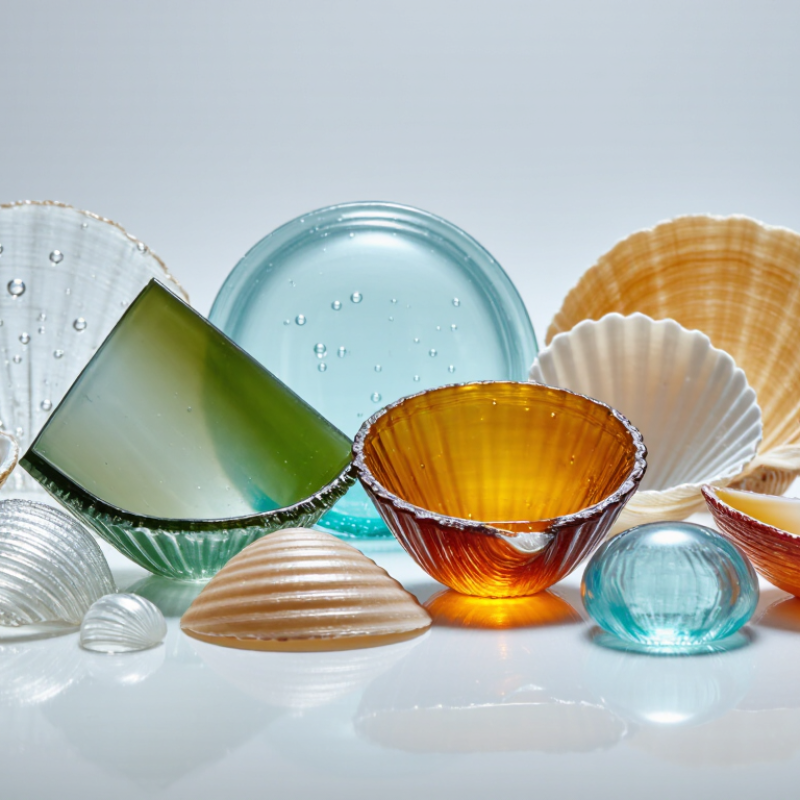
A glass shell type describes more than appearance. It combines glass composition, forming method, wall structure, surface treatment, and expected performance. In buyer inspections, I check these details before comparing price. A clear sample may look identical but behave differently under heat, impact, or pressure.
The common top ten types include soda-lime, borosilicate, fused silica, tempered, laminated, double-wall, pressed, molded, frosted, and coated glass shells. Soda-lime suits jars, covers, and general containers. Borosilicate handles laboratory vessels and repeated temperature changes better. Fused silica serves high-temperature lighting and technical equipment. Tempered shells support doors, panels, and protective covers. Laminated shells improve retention after breakage. Double-wall designs help with insulation. Pressed and molded shells fit repeatable lighting, tableware, and decorative components. Frosted shells control glare and privacy. Coated shells can improve reflection, heat control, or chemical resistance.
The categories overlap, which can confuse global purchasing teams. Tempering is a strengthening process, while borosilicate describes composition. That distinction matters. A shell for a hot liquid needs thermal resistance, accurate dimensions, and a compatible closure. A lighting shell may need optical clarity, heat management, and stable color. I have seen buyers specify “high-strength glass” without defining impact conditions or testing standards. That wording is too vague. Performance comes first. Ask for wall thickness, tolerance, thermal limits, surface finish, and inspection records before approving samples. Some applications still need prototype testing, because laboratory data cannot fully predict assembly stress or shipping damage.
| Glass Shell Type | What Defines the Type | Typical Technical Characteristics | Main Applications | Key Advantages | Important Buyer Considerations |
|---|---|---|---|---|---|
| Soda-Lime Glass Shell | Made primarily from silica, soda ash and limestone. It is the most widely used commercial glass composition and is normally supplied in annealed, tempered or laminated form. | Typical thermal expansion coefficient: approximately 8–10 × 10⁻⁶/K. Available in clear, tinted, patterned and coated versions. | Architectural glazing, doors, windows, furniture panels, display cases, lighting covers and general protective enclosures. | Cost-effective, widely available, easy to process and compatible with many decorative or performance coatings. | Annealed soda-lime glass is relatively vulnerable to impact and thermal shock. Safety applications generally require tempering or lamination. |
| Borosilicate Glass Shell | Contains a substantial amount of boron oxide, which lowers thermal expansion and improves resistance to rapid temperature changes and many chemicals. | Typical thermal expansion coefficient: approximately 3.2 × 10⁻⁶/K. Good thermal-shock and chemical resistance. | Laboratory equipment, pharmaceutical containers, process-viewing windows, high-temperature lighting covers, cookware and industrial inspection housings. | Handles repeated heating and cooling better than standard soda-lime glass and offers strong chemical durability. | Usually costs more than soda-lime glass. The supplier should confirm operating temperature, wall thickness and compatibility with thermal cycling. |
| Aluminosilicate Glass Shell | Uses alumina in the glass composition to improve hardness, strength and resistance to scratches and thermal stress. | High surface hardness and good temperature resistance. Often used as thin, flat or formed protective glass. | Electronic display covers, instrument windows, control panels, transportation interiors and high-durability protective screens. | Thin designs can provide good mechanical durability while maintaining optical clarity and a premium surface finish. | Confirm whether the shell is thermally tempered or chemically strengthened, and check optical distortion, edge quality and coating compatibility. |
| Fused Silica Glass Shell | Produced from very high-purity silica, either by melting natural quartz or using a synthetic process. It contains very little alkali content. | Typical thermal expansion coefficient: approximately 0.5 × 10⁻⁶/K. Excellent ultraviolet transmission and thermal-shock resistance. | UV optical systems, semiconductor processing equipment, laboratory components, high-temperature viewing ports and specialized light guides. | Extremely low expansion, high purity and strong performance under intense heat or ultraviolet exposure. | It is substantially more expensive and may require specialized machining, polishing and cleaning procedures. |
| Lead Glass Shell | Contains lead oxide or another high-density glass formulation to increase refractive index and, in radiation-shielding grades, attenuation capability. | High density, high refractive index and strong X-ray or gamma-ray attenuation when designed to the required lead-equivalent rating. | Medical imaging windows, radiation-protection viewing panels, optical instruments and decorative optical components. | Combines optical performance with shielding capability in specialized applications. | Specify lead-equivalent thickness, radiation energy range, regulatory requirements, handling procedures and environmental restrictions before purchase. |
| Tempered Glass Shell | Heat-treated glass that is rapidly cooled after heating, creating compressive stress at the surface and tensile stress in the core. | Generally offers approximately 4–5 times the bending strength of comparable annealed glass. Breaks into relatively small granules instead of large sharp shards. | Shower enclosures, doors, partitions, appliance panels, vehicle glazing, architectural façades and protective covers. | Improved impact resistance and safer breakage behavior than annealed glass. | It cannot normally be cut, drilled or edge-machined after tempering. Heat-soak testing may be considered where spontaneous breakage risk is critical. |
| Laminated Glass Shell | Two or more glass plies are bonded with an interlayer, commonly made from PVB, EVA or ionoplast materials. | Retains broken fragments, reduces penetration and can provide acoustic, ultraviolet and security benefits depending on the interlayer. | Skylights, façades, balustrades, vehicle windshields, security glazing, overhead glazing and noise-control barriers. | Provides post-breakage retention and can be customized for safety, sound reduction, solar control or security performance. | Check interlayer type, edge sealing, humidity exposure, required impact classification and long-term compatibility with the frame system. |
| Insulating Glass Shell | Built as a sealed unit containing two or more glass panes separated by a spacer and a sealed air or inert-gas cavity. | Improves thermal insulation compared with a single pane. Performance depends on cavity width, gas fill, spacer design and surface coatings. | Energy-efficient windows, curtain walls, façades, refrigerated displays, acoustic windows and climate-controlled enclosures. | Reduces heat transfer and can lower interior condensation risk and energy demand when correctly specified. | Confirm U-value, solar heat-gain coefficient, gas retention, seal durability, dew-point requirements and the local climate conditions. |
| Low-Emissivity Coated Glass Shell | Uses a microscopically thin metallic or metal-oxide coating to reduce long-wave infrared heat transfer from the glass surface. | Low-emissivity coatings may provide emissivity values commonly around 0.04–0.15, depending on coating design and measurement method. | High-performance windows, façades, skylights, solar-control glazing, refrigerators and temperature-controlled enclosures. | Improves thermal performance while allowing selected levels of visible light transmission and solar control. | Specify coating position, visible light transmission, solar factor, color neutrality, edge deletion and whether the coating can be exposed or must be sealed inside an insulating unit. |
| Frosted or Textured Glass Shell | Has a diffusing surface created by acid etching, sandblasting, rolling or patterned forming. The surface scatters light and reduces direct visibility. | Translucent rather than fully transparent. Light transmission and privacy level vary with texture, surface treatment and glass thickness. | Privacy partitions, bathroom enclosures, interior doors, decorative façades, lighting diffusers and display fixtures. | Provides privacy, glare diffusion and decorative value while maintaining useful daylight transmission. | Etched surfaces may require careful cleaning and handling. Confirm the exposed-surface orientation, stain resistance, pattern repeat and required privacy grade. |