Leave Your Message

What Are the Top Fluorescent Powder Suppliers Worldwide?

Choosing reliable Fluorescent Powder suppliers requires more than comparing product prices. Manufacturers in plastics, coatings, textiles, inks, and safety marking need consistent brightness, particle size, heat resistance, and color stability. A powder that glows strongly in a laboratory may perform poorly after extrusion or prolonged sunlight exposure. Real production conditions matter.

This guide examines leading suppliers worldwide through practical, verifiable criteria. These include manufacturing experience, technical documentation, quality control, testing capacity, export reliability, and customer support. Certifications can provide useful evidence, but they should not replace independent evaluation. Samples, batch records, safety data sheets, and application testing often reveal more than a polished website.

Details matter.

We also consider how suppliers respond to technical questions. A dependable company should explain recommended loading levels, compatible resins, processing temperatures, and storage requirements. Clear answers show knowledge. Vague promises may signal risk. However, supplier rankings are never permanent. Production locations, raw material costs, certifications, and service quality can change over time. Even established companies may have uneven regional support or occasional batch variation.

The goal is not to name a single universal winner. Different buyers need different solutions. A textile producer may prioritize softness and wash resistance, while a packaging manufacturer may focus on migration data and thermal performance. By comparing these practical factors, readers can create a more informed shortlist of global Fluorescent Powder suppliers and request samples with realistic expectations. That approach is slower, but usually safer.

What Are the Top Fluorescent Powder Suppliers Worldwide?

What Is Fluorescent Powder and How Is It Classified?

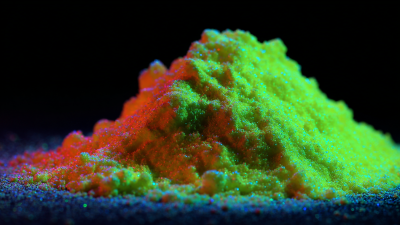
Fluorescent powder is a finely milled pigment or luminescent material that produces unusually bright color under daylight or ultraviolet light. It does not simply reflect light like ordinary pigment. Its particles absorb selected wavelengths and re-emit visible light, creating a vivid “glowing” appearance. The effect is strongest on white or light-colored surfaces.

Classification starts with chemistry. Daylight-fluorescent powders commonly use organic colorants embedded in polymer resins. Inorganic phosphor powders are different; they respond strongly to ultraviolet energy and may continue glowing after the light source stops. Optical brighteners also fluoresce, but they mainly make fabrics or paper appear whiter.

These categories should not be mixed during supplier evaluation. Performance changes sharply with particle size, resin compatibility, heat stability, and migration resistance.

Application provides another practical classification. Coarser grades suit coatings and printing inks, while finer grades disperse more evenly in plastics and textiles. A 2024 Grand View Research analysis identified coatings, plastics, and textiles as major demand areas for fluorescent pigments, supported by rising visibility and safety-marking requirements. MarketsandMarkets reported continued growth in specialty pigments, driven by high-performance applications and stronger color intensity. Report figures vary by definition, however. That matters. A careful buyer should request particle-size data, lightfastness results, heavy-metal declarations, and batch samples before comparing worldwide suppliers. One overlooked issue is outdoor durability: a powder can look spectacular under a showroom lamp, yet fade quickly under direct sunlight.

How Are the Top Global Fluorescent Powder Suppliers Evaluated?

The top global fluorescent powder suppliers are evaluated through evidence, not attractive catalogs or bold claims. Buyers should examine production experience, technical knowledge, and quality records. A reliable supplier can explain how particle size, color strength, and surface treatment affect performance. Clear answers matter.

Practical testing begins with representative samples from different batches. Inspectors may compare fluorescence under ultraviolet light, check dispersion in the target coating, and measure color stability after heat exposure. A useful supplier provides a certificate of analysis, safety data, batch numbers, and storage guidance. Data matters. Packaging should protect the powder from moisture, light, and contamination during transport. Lead times should also remain realistic during high-demand periods.

Authority is stronger when supported by traceable testing and independent certifications. Buyers can request factory audit information, calibration records, and documented quality-control procedures. Customer references are helpful, but they should not replace laboratory verification. No supplier performs perfectly in every application. Small flaws matter. One batch may show slightly weaker brightness, or a powder may disperse poorly in a specific resin. Experienced suppliers acknowledge these limits and offer corrective plans instead of vague promises. Evaluators should compare consistency, communication, technical support, compliance, and total delivered cost. The cheapest quotation can become expensive after rework, rejected production, or delayed delivery. A careful decision combines test results with direct experience and honest risk assessment.

Which Regions Host the Leading Fluorescent Powder Manufacturers?

Asia-Pacific hosts the largest concentration of fluorescent powder manufacturers. Grand View Research’s 2024 market assessment identifies the region as the leading market for fluorescent pigments, supported by strong plastics, textile, printing, and coating industries. China remains a major production base, with dense chemical supply chains around Guangdong, Jiangsu, Zhejiang, and Shandong. India is also expanding, especially in textile coloration and industrial coatings. These locations offer nearby raw materials, technical labor, and export infrastructure.

Europe remains important for specialized, higher-compliance production. Germany, Italy, France, and the Netherlands support suppliers serving automotive coatings, packaging, safety markings, and premium printing applications. A 2024 MarketsandMarkets report projects continued growth in fluorescent pigments, driven by demand for high-visibility products and advanced polymer applications. However, regional data varies by product definition. Some reports combine fluorescent powders with liquid dyes or optical brighteners, which weakens direct comparison.

North America provides another strong manufacturing and research base. The United States and Canada supply fluorescent materials for signage, industrial identification, laboratory applications, and specialty plastics. Regional producers often emphasize batch consistency, particle-size control, migration resistance, and documented safety testing. In practical sourcing, factory location is only one filter. Buyers should review certificates, technical data sheets, production audits, and sample performance under actual light exposure. Supplier rankings can look precise, but they are not always transparent. That deserves caution.

What Products and Industries Do Major Suppliers Serve?

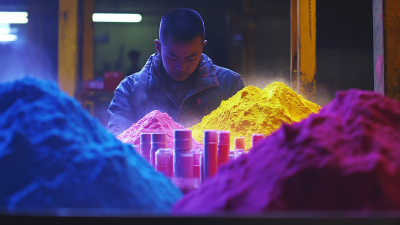
Major fluorescent powder suppliers serve manufacturers that need intense color, controlled particle size, and dependable batch performance. Their product ranges often include solvent-resistant pigments, water-dispersible powders, and heat-stable grades for industrial processing. Some suppliers also provide custom shades, matched color samples, and technical documents for formulation teams.

Plastics companies use fluorescent powders in packaging, injection-molded parts, sports equipment, and children’s products. Coating manufacturers add them to paints, floor finishes, road-marking materials, and powder coatings. Printing businesses select fluorescent pigments for labels, posters, textile designs, and promotional packaging. Textile producers may use specialized grades for synthetic fibers, although temperature limits must be checked carefully.

Other important users include laboratories, agricultural equipment makers, and safety-product manufacturers. Fluorescent tracers can help technicians identify leaks or follow material movement in controlled testing. High-visibility colors support warning signs, workwear, and emergency equipment. They are not automatically suitable for every application. Light exposure, moisture, migration, and recycling conditions can change performance. A sample may look excellent under showroom lighting, yet fade outdoors. That is where supplier experience matters: credible technical teams explain testing methods, regulatory documentation, and realistic service limits. I would still request independent testing, because product sheets rarely reveal every production problem. Small differences in dispersion can create streaks, uneven brightness, or blocked filters. Suppliers serving global markets often offer several packaging sizes, multilingual documents, and application support, but local storage conditions can affect powder quality.

How Can Buyers Select the Right Fluorescent Powder Supplier?

Choosing the right fluorescent powder supplier requires more than comparing color charts and unit prices. In practical sourcing work, buyers should check particle size, color strength, dispersion, heat resistance, and UV stability. These details affect production results. A powder that looks vivid under showroom lighting may fade after processing.

Request a small sample before placing a large order. Test it in your actual plastic, coating, ink, or textile process. Record dosage, mixing time, curing temperature, and final brightness. Ask the supplier for a recent certificate of analysis, safety data sheet, batch number, and test methods. Reliable suppliers should explain these documents clearly. Vague answers deserve attention.

Supply consistency matters as much as laboratory performance. Review production capacity, quality-control procedures, packaging protection, and delivery history. A sealed inner bag and clear batch label can prevent avoidable contamination. Ask how complaints are investigated and how replacement decisions are handled. Communication speed also reveals operational discipline.

Price can mislead.

An unusually low quote may exclude testing, secure packaging, or stable raw materials. Experienced buyers should compare total cost per usable kilogram, not only the invoice price. No supplier is perfect, and I have sometimes trusted a bright first sample too quickly. A second production trial may reveal poor dispersion or shade variation. That extra test feels inconvenient, but it protects long-term quality and customer trust.