China Best Fluorescent Powder Types for Various Applications?
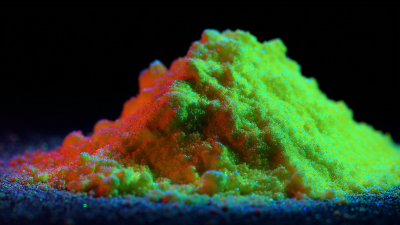
Fluorescent powder plays a crucial role in many industries, enhancing visibility and aesthetics. These powders are used in paints, coatings, and plastics, providing an essential glow under UV light. They come in various types, each suited for specific applications.
China has established itself as a key player in the production of fluorescent powders. The country offers a diverse range, from high-brightness options to eco-friendly variants. Each type of fluorescent powder has unique properties, influencing its applications in consumer products and industrial uses.
Understanding these types can be challenging. With so many variations, it’s essential to research thoroughly. Companies must balance functionality with compliance. The right selection is vital for performance and safety. Flaws in choice can lead to unsatisfactory results, which warrants careful consideration and expert guidance.
China's Leading Fluorescent Powder Types: Overview of Top Varieties
Fluorescent powders in China serve multiple industries, from automotive to art. These powders emit bright colors under UV light, making them valuable for various applications. One popular type is the strontium aluminate, known for its long afterglow. It's often used in emergency exit signs due to its durability and luminosity.
Another significant variety includes rare earth phosphors. These pigments offer high brightness and efficiency in lighting applications. They are vital in LED technology. Their superior performance sets them apart, but sourcing these raw materials can be challenging. This inconsistency raises concerns about long-term supply stability.
Additionally, there’s organic fluorescent powder, which finds its niche in cosmetics and textiles. It provides vibrant colors and is generally safer for skin contact. However, the environmental impact of these materials needs further exploration. The balance between bright aesthetics and sustainability remains a critical discussion point.
Key Applications of Fluorescent Powders in Industries: A Detailed Analysis
Fluorescent powders play a crucial role in various industries. They enhance visibility and provide safety in numerous applications. For instance, in the construction industry, these powders are often used in safety signage and markings. Bright, reflective materials can significantly reduce accidents in low-light conditions. Workers benefit from increased awareness of their surroundings.
In the textile sector, fluorescent powders are incorporated into fabrics. These bright colors not only attract attention but also have practical uses. Clothing with fluorescent elements is used in hunting, workwear, and sports uniforms. However, not all fluorescent powders are equal. Some may fade quickly or lack durability, which can be problematic.
In the realm of coatings, fluorescent powders provide unique aesthetic effects. They are often found in automotive paints and decorative finishes. However, achieving the right formulation can be challenging. Factors like UV stability and environmental impact must be considered. Ensuring high-quality results requires expertise and a deep understanding of material properties.
Market Trends: Growth and Demand for Fluorescent Powders in China
Fluorescent powders are gaining traction in various sectors across China. These materials are used in many applications, including paints, plastics, and textiles. Demand for high-quality fluorescent powders is surging, driven by a growing emphasis on vibrant colors and durability.
Recent market trends indicate that industries are seeking more eco-friendly options. Many companies are investing in research to improve the efficiency of these powders. As a result, we see a shift towards sustainable production methods. Yet, not all manufacturers have made this transition effectively. There is inconsistency in quality across different suppliers.
The future of fluorescent powders depends on innovation. Continuous development is necessary for meeting evolving customer demands. Although some companies excel, others struggle to keep pace. It raises questions about the reliability of the products available. Consumers need to ensure they are purchasing from reputable sources.
China Best Fluorescent Powder Types for Various Applications
| Fluorescent Powder Type |
Applications |
Market Demand (2023) |
Growth Rate (%) |
| Yttrium Aluminum Garnet (YAG) |
Lighting, Displays |
High |
8% |
| Zinc Sulfide (ZnS) |
Coatings, Plastics |
Medium |
5% |
| Strontium Aluminate |
Safety Signs, Emergency Lighting |
High |
10% |
| Calcium Sulphide |
Textiles, Paints |
Low |
3% |
| Barium Titanate |
Electronics, Capacitators |
Medium |
6% |
| Lanthanum Phosphate |
Medical Imaging, Research |
Growing |
7% |
Comparative Performance: Different Types of Fluorescent Powders Evaluated
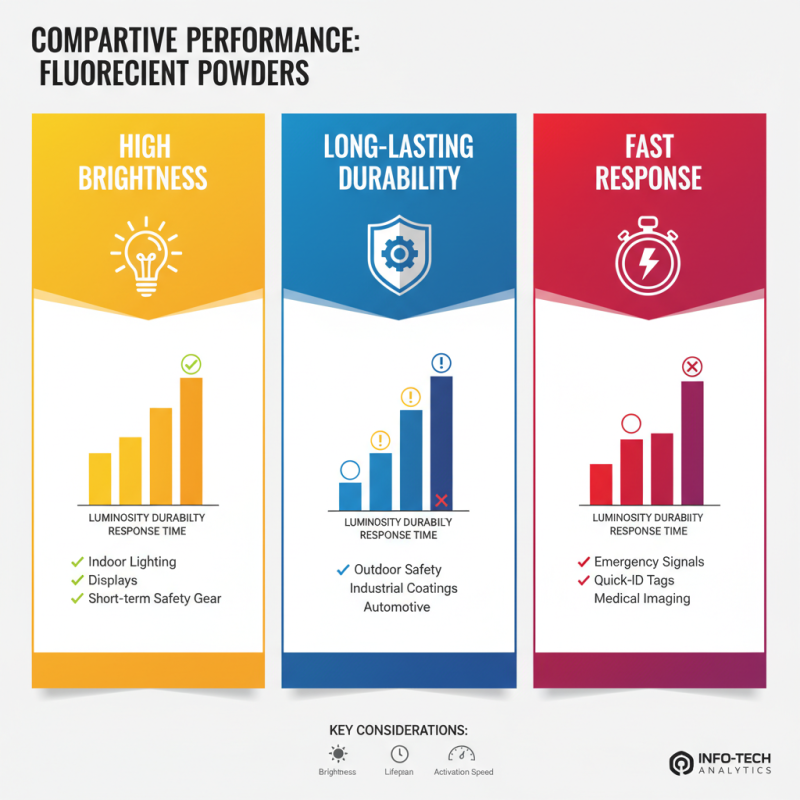
Fluorescent powders play a crucial role in various applications, from lighting to safety gear. Evaluating their performance can help users make informed choices. Different types of fluorescent powders exhibit distinct characteristics, impacting their usability. For instance, some powders are optimized for high brightness, while others offer better durability. This performance comparison is essential for industries relying on specific luminosity and longevity.
The most common types categorized by phosphorescent properties include strontium aluminate and zinc sulfide. Strontium aluminate shines brightly and has a prolonged glow, yet it may cost more to produce. On the other hand, zinc sulfide is less expensive but has a shorter lifespan. Users must weigh initial costs against long-term benefits.
In practical applications, safety gear with fluorescent powders must ensure visibility under varying light conditions. High-intensity colors provide better recognition at night. However, some powders may fade quickly when exposed to UV light. This inconsistency can pose a problem for outdoor applications. Knowing the limitations of each type is critical for optimal decision-making.
Safety Standards and Environmental Impact of Fluorescent Powders in China
Fluorescent powders play a crucial role in various applications, from lighting to cosmetics. In China, ensuring the safety of these products is a top priority. The government has implemented strict safety standards to regulate the use of fluorescent materials. Manufacturers must adhere to these guidelines to prevent harmful substances from harming consumers or the environment. Testing for heavy metals and volatile organic compounds is often required.
The environmental impact of fluorescent powders cannot be overlooked. Many powders contain materials that can be hazardous if not disposed of properly. There are ongoing discussions regarding recycling processes and disposal methods. Some companies are reflecting on their production techniques to minimize waste and enhance sustainability. The dialogue about ecological responsibility is vital, as the industry evolves. It’s evident that while progress is made, there’s always room for improvement. Addressing these challenges head-on can lead to more responsible practices in the future.