2026 Top LED Spare Parts You Need for Global Sourcing?
As the global demand for LED technology continues to rise, companies must focus on sourcing high-quality LED spare parts. According to a report by MarketsandMarkets, the global LED market is projected to grow at a CAGR of 13.4% from 2021 to 2026, reflecting the increasing integration of LEDs in various applications. This growth underscores the importance of reliable LED spare parts in maintaining system efficiency and longevity.
LED spare parts are essential for industries ranging from automotive to consumer electronics. As technology evolves, the need for specific components, such as drivers, lenses, and heat sinks, becomes critical. A study by Allied Market Research highlights that the global demand for LED components will reach $117.3 billion by 2027. Sourcing reliable and quality spare parts ensures the performance and durability of LED products, which is vital in a competitive market.
However, challenges persist in sourcing these parts. Variability in quality and compatibility can lead to inefficiencies. Companies must assess suppliers meticulously to mitigate risks. As the LED market expands, ensuring access to quality LED spare parts will be crucial for operational success and innovation.

Key Components of LED Lighting Systems for 2026
In 2026, the LED lighting industry continues to evolve. Key components driving this change include LED chips, drivers, and thermal management systems. The global LED market is expected to reach $136 billion by 2026, driven by advancements in efficiency and brightness.
LED chips remain critical for ensuring high light output and energy-saving capabilities. These innovations in chip technology contribute to a 30% increase in luminous efficacy over the past five years, according to a recent report from MarketsandMarkets. Drivers play a significant role in enhancing system performance. They regulate power and improve lifespan, crucial for both commercial and residential applications.
Tip: When sourcing LED components, prioritize suppliers who provide comprehensive data on product performance. Reliable specifications can save costs and ensure quality.
Thermal management systems are essential for maintaining LED longevity. Overheating can significantly reduce lifespan, so effective cooling solutions are paramount. The industry is seeing a shift towards passive cooling methods. These methods are less complex and can achieve thermal efficiency comparable to active systems.
Tip: Analyze thermal performance data and consider case studies when evaluating suppliers. This approach helps mitigate risks and enhances system reliability.
Essential Spare Parts for LED Manufacturing and Repair
In the rapidly evolving LED manufacturing landscape, sourcing essential spare parts is critical for efficiency and reliability. Research indicates that the global LED spare parts market is projected to grow by over 10% annually, reflecting increasing demand in various applications. Key components such as LED chips, drivers, and heat sinks are fundamental for maintaining optimal performance. A recent report highlighted that failure to use high-quality components can lead to a 30% reduction in product lifespan.
Manufacturers must prioritize sourcing from reputable suppliers. Many parts are subject to variable quality, which can directly impact performance. For example, outdated or substandard LED drivers often lead to flickering and reduced efficiency. Recent studies show that approximately 15% of repairs stem from driver failures alone. Ensuring that the right spare parts are available is not just about cost; it also involves understanding the intricacies of how each component works together.
The availability of these parts affects overall productivity. Shortages or delays can halt production lines, leading to significant financial losses. A focus on quality assurance when sourcing is vital, as subpar parts could necessitate further repairs and waste time. The importance of developing a strategic sourcing plan cannot be overstated. Manufacturers must adapt and consider their long-term needs while ensuring they have the essential spare parts on hand.
2026 Top LED Spare Parts for Global Sourcing
This chart shows the essential spare parts needed for LED manufacturing and repair in 2026.
Global Sourcing Strategies for LED Spare Parts
In the rapidly evolving LED spare parts market, global sourcing strategies are crucial. A recent report indicates that the global LED market will reach USD 100 billion by 2026, highlighting the need for efficient sourcing practices. Businesses often overlook the small components that make a significant impact on overall performance. This includes drivers, lenses, and heat sinks. Sourcing these parts globally can reduce costs and enhance product quality.
Establishing reliable supplier relationships is vital. Reports suggest that companies utilizing global suppliers can reduce production costs by up to 30%. However, navigating supply chain challenges is not easy. Variability in quality and longer lead times can disrupt production. Businesses must prioritize suppliers with proven track records in quality assurance and timely delivery.
Moreover, assessing the environmental footprint of sourced materials is becoming essential. Consumers demand sustainability, pushing companies to evaluate their supply chains. A study revealed that 60% of customers consider sustainability in their purchasing decisions. As companies refine their sourcing strategies, they must also reflect on the balance between cost and quality. Engaging with suppliers that prioritize both efficiency and sustainability can lead to long-term benefits.
Trends in LED Component Supply Chains for 2026
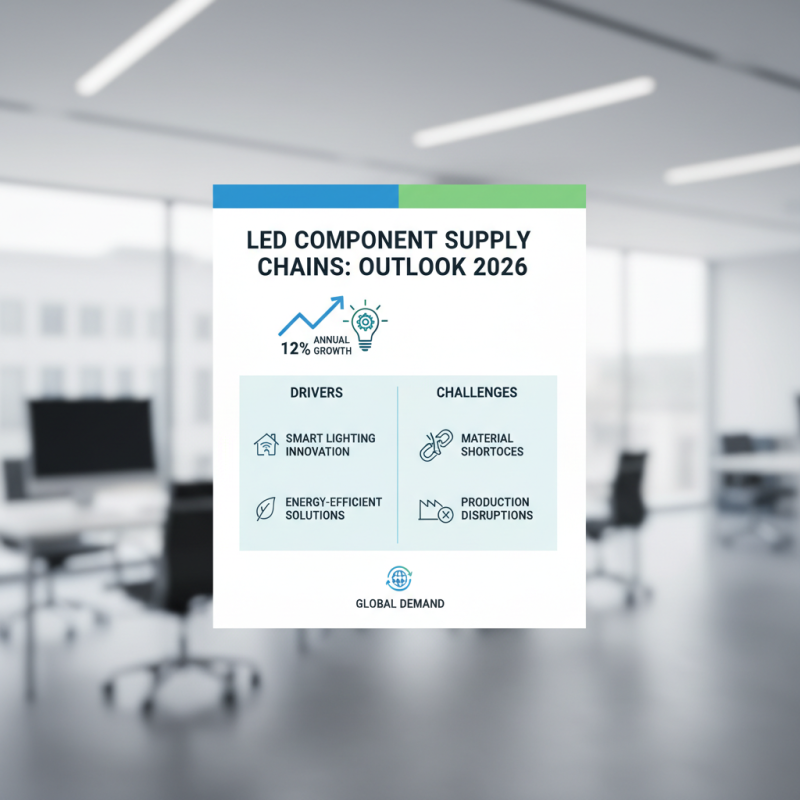
As we approach 2026, the LED component supply chains are evolving rapidly. Research indicates that the global demand for LED components will grow by approximately 12% annually. This growth is driven by innovations in smart lighting and the increasing shift towards energy-efficient solutions. However, supply chain challenges persist. For instance, material shortages can disrupt production schedules.
The sourcing of key LED spare parts requires attention to trends and market dynamics. The increasing reliance on automation in manufacturing processes necessitates a more flexible supply chain. Data from industry reports show that 40% of manufacturers face supply disruptions due to limited availability of raw materials. This highlights the need for diversifying suppliers and assessing regional differences in availability.
Sustainability remains a critical factor. Nearly 80% of consumers prefer energy-efficient products, pushing manufacturers to adapt. Yet, the complexities in sourcing sustainable materials introduce uncertainties. For LED manufacturers, it’s essential to reflect on these challenges. Continuous improvement is needed to build resilience in supply chains while meeting market demands. Awareness and strategic planning can help navigate this complex landscape.
Quality Standards for LED Spare Parts in International Markets
When sourcing LED spare parts globally, adhering to quality standards is crucial. In recent industry reports, over 70% of manufacturers reported issues with substandard components. These challenges often lead to performance inefficiencies and higher failure rates.
Understanding international quality benchmarks is vital. For example, UL (Underwriters Laboratories) certification ensures safety in electrical components. CE marking indicates compliance with European standards. These benchmarks not only foster reliability but also enhance marketability.
Tip: Always request quality certifications from suppliers. This could save time and money in the long run.
Common issues arise when sourcing from regions lacking stringent regulations. Poor-quality parts can damage entire LED systems. Reports indicate that 40% of failures stem from using non-compliant components. Investing in certified parts can reduce risks.
Tip: Perform regular audits of your suppliers. Ensure they consistently meet quality expectations. This proactive approach builds stronger supply chains.